This short guide is designed to help academics and researchers who are participating in the Revitalisation of Linguistic Diversity & Cultural Heritage (LocalLing) project in March 2026 settle in smoothly during their first days in Volos, before routines are established and local knowledge builds up. Most issues can be resolved quickly, but having a clear starting point reduces unnecessary stress.
That said, it is normal for the first week to feel slightly disorienting. Volos is a forgiving city: distances are short, services are accessible, and help is easy to find. Also, the University of Thessaly LocalLing team is at hand to help if you need additional assistance.
Settling in
Cash and payments
Greece is largely card-friendly, but small shops, kiosks, and taxis may prefer cash. Some cards, like American Express, are not universally accepted.
Cash is available in ATMs, which are not as widely available as in some other countries. Planning ahead, if you think you will need cash, is helpful.
SIM card / mobile data
Prepaid SIM cards are available from major providers (e.g. Cosmote, Vodafone, Nova). SIMs can be purchased at official shops with a passport or ID. Mobile data coverage in Volos is reasonable (although not always very reliable in narrow streets).
Internet access
The University of Thessaly will provide you with WiFi access across its facilities. You can access WiFi freely or connect using your Eduroam credentials.
Outside the university, apartments and hotels are likely to have reliable Wi-Fi. Cafés typically offer free Wi-Fi (no registration usually required).
Food & daily supplies
Supermarkets
Most large supermarkets are open Monday to Saturday, typically 08:00–21:00 (20:00 on Saturdays). Smaller neighbourhood stores may close earlier or later. The majority of supermarkets are closed on Sundays.
Credit and debit cards are widely accepted, including contactless payments. Cash is also accepted everywhere. Self-checkout is available in some larger stores but not universal.
Most major supermarket chains offer free loyalty cards. Depending on the store, these may offer discounted prices at the till or points that can be exchanged for a discount on future purchases. Registration is simple and can usually be done in-store or online; a Greek phone number is sometimes requested but not always required. Loyalty cards are useful for longer stays (several weeks) but not essential.
Halal-certified products are limited, but some imported items are available.
Local bakeries and cafes
Bakeries are found on almost every neighbourhood street. They open early in the morning (often from 06:30–07:00) and close in the evening. Bakeries are an easy and inexpensive option for breakfast or a light lunch, especially during the first days before routines are established.
Cafés in Greece are social spaces rather than quick stopovers. Coffee is commonly consumed sitting down, and staying for an extended period is normal. Most cafés offer espresso-based drinks, light snacks or desserts. Outdoor seating is common, particularly along the seafront and on main streets. Note that smoking indoors is not permitted.
Using a laptop is generally tolerated during quiet hours, especially in the mornings or early afternoons. During busy periods, long stays with laptops are best avoided. Free Wi-Fi is common, but speed and reliability vary.
Cards and cash are widely accepted. Service is informal and unhurried. Table service is the norm; tipping is appreciated but not expected. You can do so by rounding up the bill or asking the server to keep the change if paying in cash.
Special dietary requirements
Vegetarian dishes are widely available in Greek cuisine. Vegan options are increasingly common, especially in cafés and casual restaurants, but not guaranteed everywhere.
Awareness of food allergies is improving, but it’s less systematic than in some countries. Menus do not always list allergens explicitly. If you have serious allergies, you should communicate clearly with staff, choose simpler dishes, or rely on home cooking where possible.
Halal-certified restaurants are very limited in Volos. Halal meat can be sourced from selected butchers and a small number of ethnic grocery shops. Many local restaurants can offer halal-friendly choices, such as fish and seafood dishes, vegetarian plates, and vegetable-based starters (meze). However, these are not halal-certified environments.
Health and Safety Orientation
Pharmacies
For minor health concerns, a pharmacy is often the first and most efficient point of contact.
Pharmacists are university-trained professionals and usually speak good English. You can expect to find over-the-counter medications and prescription medicines, as well as good medical advice for minor issues. You can also purchase health-related items (e.g. masks, thermometers, personal care products). Payment by card or cash is accepted.
Standard opening hours are typically Monday to Friday (09:00-14:00 and 17:00-21:00) and Saturday mornings. Outside these hours, rotating on-call pharmacies operate each night and on Sundays. The addresses of duty pharmacies are posted on the door of every pharmacy and online.
Hospital
Volos is served by Achillopouleio General Hospital of Volos, the main public hospital for the city and the wider region (tel. +30 2421351000). It is located close to the city centre and is easily accessible by taxi or local bus. If you are unable to move, an ambulance can be summoned by calling 166.
The hospital operates within the Greek public healthcare system. It provides a high standard of medical care, but waiting times in the emergency department vary, and can be (much!) longer than in other countries, depending on urgency and time of day.
Medical staff are very likely to speak English well, but the linguistic proficiency of administrative personnel varies.
The hospital caters for emergencies and scheduled clinical appointments. EU visitors should bring a valid European Health Insurance Card (EHIC). Non-EU visitors should ensure they have appropriate private health insurance.
Private medicine
Most medical and dental specialities are available through private practices (e.g. general practitioners, internists, gynaecologists, dermatologists). Pharmacies often provide reliable referrals.
Appointments are usually easy to arrange, but waiting times vary for non-emergency cases. Many doctors and dentists speak good English.
Payment is typically out of pocket, with receipts provided for insurance reimbursement where applicable. Some private clinics may discourage the use of credit or debit cards.
General emergency number in Greece: 112

About me
Achilleas Kostoulas is an applied linguist and language teacher educator at the Department of Primary Education, University of Thessaly, Greece. He holds a PhD and an MA in Teaching English to Speakers of Other Languages from the University of Manchester, UK and a BA in English Studies from the National and Kapodistrian University of Athens, Greece.
His research explores a wide range of issues connected with language (teacher) education, including language contact and plurilingualism, linguistic identities and ideologies, language policy and didactics, often using a Complex Dynamic Systems Theory to tease out connections between them. Some of his work in the field includes the research monograph The Intentional Dynamics of TESOL (2021, De Gruyter; with Juup Stelma) and the edited volume Doctoral Study and Getting Published (2025, Emerald; with Richard Fay), as well as numerous other publications.
Achilleas currently contributes to several projects that bring together his long-standing interests in language education, teacher development, and the social dimensions of language learning. As the coordinator of the expert team of AI Lang (Artificial Intelligence in Language Education), an initiative of the European Centre for Modern Languages of the Council of Europe, he works on developing principles and resources to help educators make informed, pedagogically grounded use of AI in their teaching. He also leads the University of Thessaly team of ReaLiTea (Research Literacy of Teachers), a project that supports language teachers in developing the capacity to engage with, and contribute to, educational research. Alongside these, he contributes to LocalLing, a Horizon-funded initiative to preserve and strengthen heritage and minority languages globally.
In addition to the above, Achilleas is the (co)editor-in-chief of the newly established European Journal of Education and Language Review, and welcomes contributions that explore the dynamic intersections between language, education, and society.
About this page
This page contains information for the members of the EU-funded Revitalisation of Linguistic Diversity & Cultural Heritage (LocalLing) project, who will be visiting the University of Thessaly (Volos Campus) in March 2026. The information is curated by the University of Thessaly LocalLing team, under the direction of Achilleas Kostoulas, but it is not in any way endorsed by the University of Thessaly or by the European Union. Likewise, the LocalLing team provides the information as a service to colleagues, but it does not necessarily endorse the services or venues described in this page.
The page was created on 21st December 2025, and was last updated on 21st December 2025. Although every effort has been made to provide information that is factually correct at the time of writing, the authors cannot accept responsibility for errors in the information we have been given or subsequent changes.
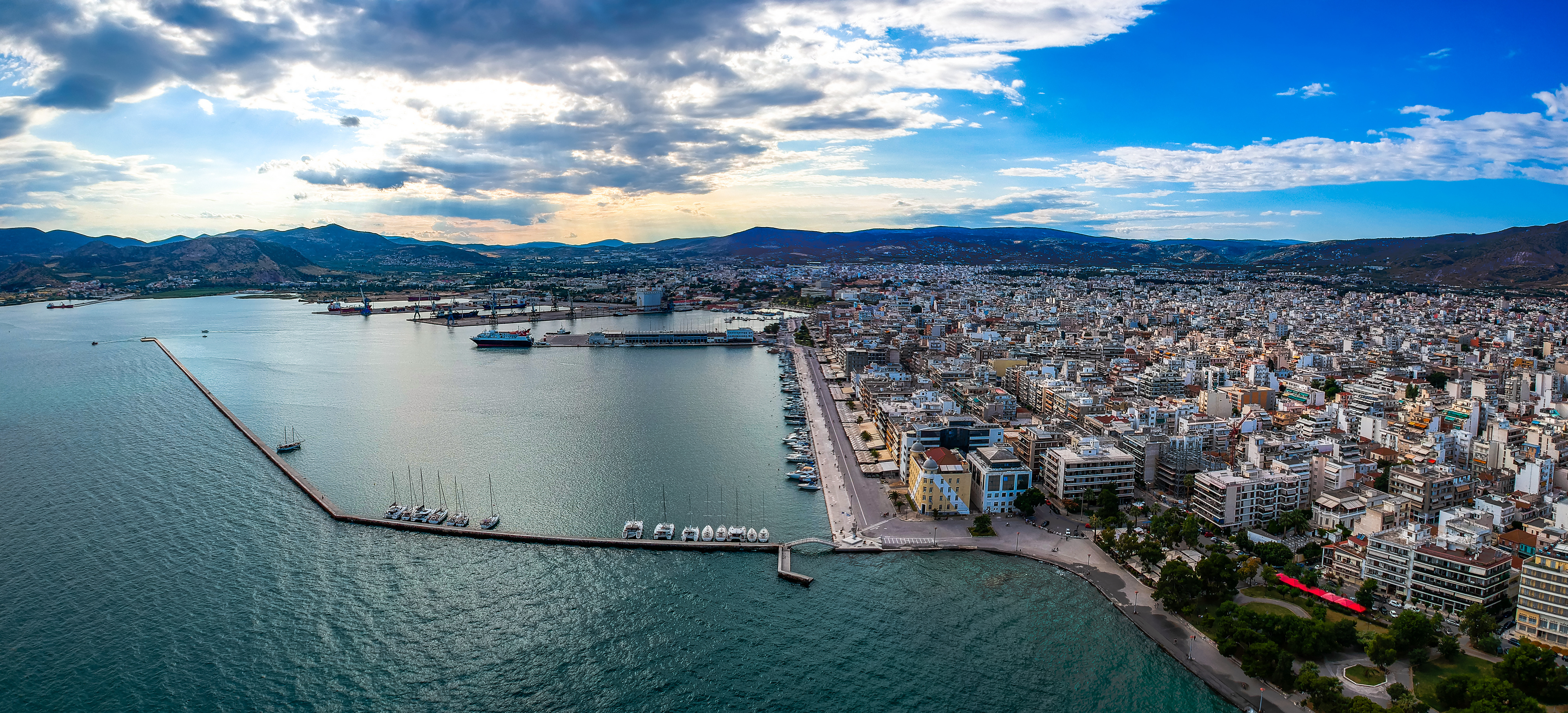
The featured image, by flovie @ Adobe Stock, is used with license. AI has been been used to assist with translation, copyediting and search engine optimisation of content. However, all content has been initially drafted and subsequently reviewed by human editors.