The conference season is coming up, so this might be a good time to go over some of the basics for academic presentations. In this post, I will share some advice about presenting a conference paper, and next week, I’ll write about dealing with questions and feedback.
I have written the tips that follow for people without much experience in academic conferencing, but if you are more seasoned in conference presentations, feel free to read on, and maybe add to the points I made (or challenge them!)
Be prepared
- If you’re using a PowerPoint presentation, make sure you email a copy to the conference organisers, but carry a copy with you as well, just in case.
- Simple storage methods, such as a USB stick, are more reliable than sophisticated ones (Are you certain that there is internet access in the conference venue? Will the organisers’ firewall let you access the cloud?).
Know the lay of the land
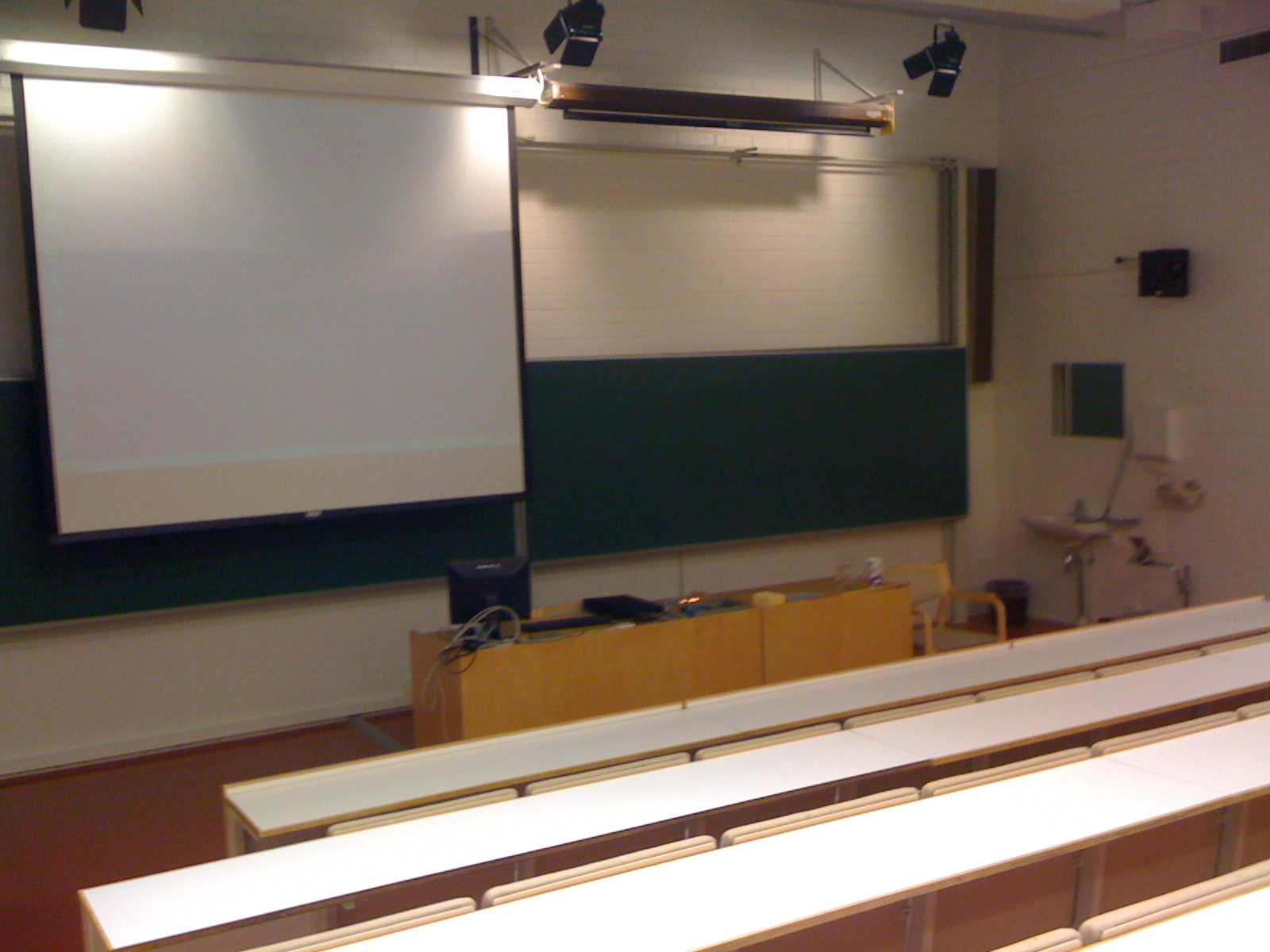
- If possible, try to familiarise yourself with the venue where you are presenting. I prefer to arrive before the first session begins, while the room is still empty. This helps me to get a feel for the size and layout of the room, determine whether I can walk about, and find out what the ‘no go’ areas are, i.e., where I’d be obstructing the participants’ view or standing between the projector and the projection screen.
- Check whether your PowerPoint slides have been loaded onto the computer, and make sure they load properly. You don’t want reminders to register MS Office or install critical updates popping up just as you are about to begin speaking (it happens more often than you think!). If you are provided with a remote clicker, familiarise yourself with the controls, and test its range. If you’re using your own clicker, this is the time to plug it in and set it up.
- If you are speaking from a podium or a table with a fixed microphone, it’s a good idea to find out how to turn it on and whether it is adjustable.
Meeting the panel chair
- Not all conferences have a panel chair, but when there is one, it’s a good idea to get to know them before the presentation. The panel chair is responsible for introducing you to the audience. However, you should not assume that they have received all the information they need, so make sure you introduce yourself in time. (Note to panel chairs: this is a great opportunity to ask how to pronounce presenters’ names!)
- While you’re talking, the chair will let you know when your time is running out, usually by holding out a paper sign. If you are concerned that you might not notice it, you could ask them to verbally remind you, or tap on the table.
- You should also discuss the practicalities of the question-and-answer session, such as who gets to nominate speakers, or whether follow-up comments will be allowed.
Ready to present?
- Before you start talking, make sure that the microphone is on, and make any adjustments necessary. You should be able to speak to the microphone without leaning forward.
- Audiences are usually very sympathetic, so there really is no need to preface your talk with remarks such as “Please excuse my nervousness, this is my first conference” or “I apologise for not speaking English well enough”. Project your confidence if you have it; if not, just pretend you are confident :)
While presenting
- Resist the tendency to gesture wildly. Hand gestures that are larger than the outline of your body make you appear nervous. You may find it easier to control your hand movements by resting your hands on the podium or table, by keeping one hand behind your back as you walk, or by having your palms face each other and touching at the fingertips.
- Make eye contact with the audience. You may find it helpful to focus on one individual at a time, mentally block the surroundings and pretend that you are talking to them alone. Continue looking for about as long as it takes to deliver a single sentence, or until you get a reaction (ideally a nod!), at which point you can move on to another ‘target’.
- Even if you are reading out of your notes, make sure you look up as much as possible. Try to look at your notes at the beginning of a sentence, but end the sentence with your eyes on the audience. Do not look down again until you have stopped speaking.
- Don’t be alarmed or disappointed if audience members stand up and walk out. It’s very common, especially if there are multiple parallel sessions at the same time. For all it’s worth, I once had a full third of my audience leave the room (in my defence, it was lunchtime and there was a buffet outside).
Finishing the presentation
- Towards the end of your talk, the chair will start signalling that time is running out. You will usually get a first sign when you have five more minutes to go, and then again when you have two and/or one minute left. These signals are given to help you, and if you have timed your talk well, you may find them reassuring. There is no need to panic, even if you can tell that you will need 1-2 minutes more than scheduled.
- On the other hand, if you find that you have too much ground to cover, the five-minute signal is a warning to start skipping to the more important parts. By the time you get to the one-minute signal, you should be ready to deliver your conclusion.
- Even if you feel you didn’t do as well as you would have liked, end off with your biggest smile! Nothing wins the hearts and minds of the audience faster than that.
When you have finished talking, the chair will most likely open the floor to questions. Surviving the discussion will be the topic of a subsequent post. Till next time, then!
Before you go: If you found this post while preparing for a conference presentation, I hope it has answered your questions and helped you to feel less anxious. Do feel free to add any other ideas you have which readers might find helpful. Also, please feel free to use the social sharing buttons below this post to forward this post to anyone who might find it interesting. Good luck with your presentations!
By subscribing to this blog, you will receive occasional updates on language education, including my ongoing work on AI in language teaching and learning and on language teachers’ research literacy. (privacy policy)

Reflective writing and AI: what is the reflective text for?
Generative AI can produce reflective prose on demand. What, then, is reflective writing for in language teacher education? Notes on writing as thinking.


Modernisation for whom? Reading Greece’s foreign-language reform
A short report presents Greece’s foreign language reform as a “system-wide modernisation”. Read closely, the reform speaks the language of multilingualism while organising itself around English, pilots AI before governing it, and leaves open questions about evidence, materials, and teacher readiness.

ReaLiTea Resources: Research Literacy Tools for Teachers
After three years of work, the ReaLiTea project is sharing its finalised resources. This post introduces three tools from Team Thessaly and invites you to our online meeting on 11 December 2026.

About me
Achilleas Kostoulas is an applied linguist and language teacher educator at the Department of Primary Education, University of Thessaly, Greece. He holds a PhD and an MA in Teaching English to Speakers of Other Languages from the University of Manchester, UK and a BA in English Studies from the National and Kapodistrian University of Athens, Greece.
His research explores a wide range of issues connected with language (teacher) education, including language contact and plurilingualism, linguistic identities and ideologies, language policy and didactics, often using a Complex Dynamic Systems Theory perspective to tease out connections between them. His published work includes the research monograph The Intentional Dynamics of TESOL (2021, De Gruyter; with Juup Stelma) and the edited volume Doctoral Study and Getting Published (2025, Emerald; with Richard Fay), among numerous other publications.
Achilleas currently contributes to several projects that bring together his long-standing interests in language education, teacher development, and the social dimensions of language learning. As the coordinator of the AI Lang (Artificial Intelligence in Language Education) expert team at the European Centre for Modern Languages of the Council of Europe, he is active in developing principles and resources to help educators make informed, pedagogically grounded use of AI in their teaching. He also leads the University of Thessaly team of ReaLiTea (Research Literacy of Teachers), a project that supports language teachers to engage with, and contribute to, educational research. Alongside these, he contributes to LocalLing (Revitalisation of Linguistic Diversity and Cultural Heritage), a Horizon-funded initiative for the preservation of heritage and minority languages globally.
In addition to the above, Achilleas is the (co)editor-in-chief of the European Journal of Education and Language Review, and welcomes contributions that explore the dynamic intersections between language, education, and society.
About this post
This blog is a space for slow, reflective thinking about applied linguistics, language education, professional development, and the role of technology in language teaching and learning. Transparency about process, tools, and authorship is part of that commitment.
- I wrote this post on 12th April 2014. An update on 13 Nivember 2026 refreshed the look of the post, but did not alter its substantive content.
- The views expressed here are personal and do not necessarily reflect those of the University of Thessaly or any other entity with which I am affiliated.
- Alternatively, and always encouraged, please consider supporting an independent bookstore.
- The featured image is my own work.

Leave a Reply