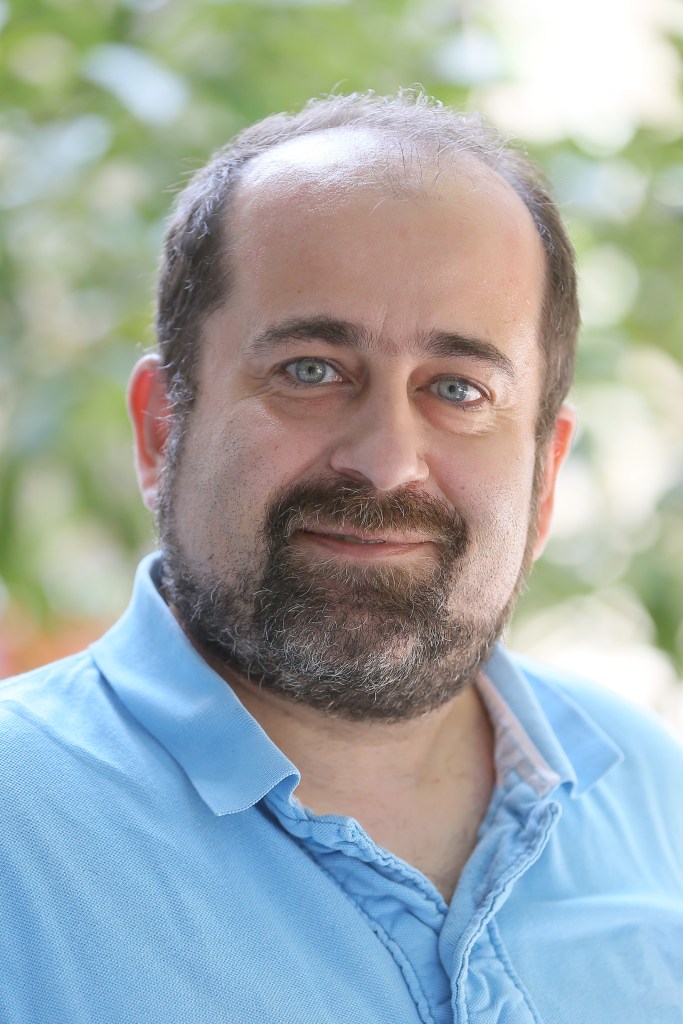

You have probably read about the mass resignation of all the editorial board and the reviewers of Lingua, a prestigious journal published by Elsevier [in November 2015]. For those of you who may have missed it, here are some highlights.
Contents of this post
What happened?
Last July, the editors of Lingua asked Elsevier to renegotiate the way the journal worked. Like all academic journals, Lingua publishes articles written by researchers whose salaries are paid by universities or research grants. These are submitted to the journal for free, and they are reviewed by unpaid volunteers. For their part, the publishers provide some services, such as proofreading and typesetting, often of somewhat uneven quality. Then, they resell the content to university libraries through opaque deals, at what are arguably exorbitant prices. Alternatively, Elsevier might make individual articles publicly available under an Open Access model, in exchange for which they levy substantial Article Processing Charges, or APCs.
In a letter to Elsevier, the editors suggested that Lingua should become a fully open-access journal with modest APCs. Here’s a relevant quote:
First of all, we would like Elsevier to transfer the journal to full Open Access status. We understand that the current Article Processing Charges (APCs) at Elsevier are in the amount of 1800 euros. We believe that this amount is too high under current market conditions, and would like to ask that the APCs be lowered to a maximum of 400 euros.
Predictably, Elsevier was reluctant to make such concessions, at which point all six Editors and the 31 academics who made up the editorial board resigned their posts, and announced their plans to launch a new academic journal, called Glossa. Apparently, they already have a Twitter account:
Johan Rooryck, who has been editing the journal since 1998, made the following comments to International Higher Education:
By quitting his position, Rooryck will give up his current compensation from Elsevier, which he said is about 5,000 euros (about $5,500) a year. He said the pay is minimal for the two to three days a week he works on the journal. “I would be better off going to flip burgers in that time,” he said.
Rooryck expects to earn nothing when Glossa launches — and he’s fine with that. “I’m doing this for purely idealistic reasons. I’ve had it. I think you have to move forward and it might as well be linguistics” that does so. Rooryck said that while he is particularly bothered by Elsevier’s policies, the criticisms extend to other corporate publishers. He said that some of his colleagues are already talking to editors of other journals, and hope that they will follow the lead of Lingua and that “linguistics can be a model for other disciplines” in standing up to publishers.
The Empire Strikes Back
For their part, Elsevier have brushed off concerns. In a public statement that was issued on Wednesday, they pointed out that “they are managing the activities of 80,000 editors for 2200 journals”, and that the small number of dissenters who handed in their notice will be replaced. They also presented their own account of events:
The editors of Lingua wanted for Elsevier to transfer ownership of the journal to the collective of editors at no cost. Elsevier cannot agree to this as we have invested considerable amount of time, money and other resources into making it a respected journal in its field. We founded Lingua 66 years ago.
There are many who might take issue with the last statement. Johan Rooryck, for instance, had the following comments to make:
It does not come down to what “we” means. It comes down to what “found” means. […] Elsevier seems to retroactively and transitively claim that North Holland, hence Elsevier, set up and established Lingua. Now please consult the introduction of the first volume of Lingua in 1949 […] North Holland is not even mentioned anywhere, it is simply the printer of the journal. So there is no way Elsevier can claim to have “founded” the journal 66 years ago. That claim is demonstrably false.
But the claim is also interesting, as it is revealing of the hubris of publishers today. Elsevier seems to believe that, because it has legal ownership of the title of the journal and the copyright of the articles, it can also claim intellectual ownership of the journal and of its articles. This is not so. Scientific results belong to their authors and to the public. Research is paid for with public money. Private companies should not make exaggerated profits on goods produced with public money.
Scientific results belong
Johan Rooryck
to their authors and to the public
What next?
It remains to be seen how successful Glossa becomes, both in terms of commercial sustainability and in terms of academic reputation. I think it will do both. More importantly, it remains to be seen whether we are at the brink of a paradigm shift in academic publishing. I am less optimistic about that.
Patrick Dunleavy, writing in the LSE Impact of Social Sciences blog, argued that unless there is a substantial reduction in APCs, universities could reclaim scholarly publishing for the academic community. Here’s his take on what an alternative model might look like.
Serious, big universities will be thinking, are already thinking – why don’t we publish digitally and open access ourselves? All that academics at (for instance) Stanford, Harvard, Imperial or LSE get from being published in prestigious journals is the certification of peer review, itself an increasingly battered and replaceable currency. Yet top universities could organize their own conventional peer review processes economically and effectively, much as they do for PhD examining in the UK, using a system of mutual service and support. All the rest of the piece – getting articles publicized by twitter and blogs, providing a well-edited product, delivering the article to any PC, phablet or colour printer in the world – can be done easily and cheaply by universities themselves.
There are already many signs that academic publishing is nearing a crisis point. Universities across the world are increasingly unwilling to pay extortionate prices for access to research [1, 2, 3], and many academics are wary of providing free labour to profit-making entities (e.g., the Cost of Knowledge campaign). I wouldn’t be surprised, or saddened, if the hard line adopted by Elsevier precipitates such a change.
By subscribing to this blog, you will receive occasional updates on topics relating to language education, including my ongoing work on AI in language teaching and learning and on the research literacy of language teachers. (privacy policy)

About me
Achilleas Kostoulas is an applied linguist and language teacher educator at the Department of Primary Education, University of Thessaly, Greece. He holds a PhD and an MA in Teaching English to Speakers of Other Languages from the University of Manchester, UK and a BA in English Studies from the National and Kapodistrian University of Athens, Greece.
His research explores a wide range of issues connected with language (teacher) education, including language contact and plurilingualism, linguistic identities and ideologies, language policy and didactics, often using a Complex Dynamic Systems Theory to tease out connections between them. Some of his work in the field includes the research monograph The Intentional Dynamics of TESOL (2021, De Gruyter; with Juup Stelma) and the edited volume Doctoral Study and Getting Published (2025, Emerald; with Richard Fay), as well as numerous other publications.
Achilleas currently contributes to several projects that bring together his long-standing interests in language education, teacher development, and the social dimensions of language learning. As the coordinator of the expert team of AI Lang (Artificial Intelligence in Language Education), an initiative of the European Centre for Modern Languages of the Council of Europe, he works on developing principles and resources to help educators make informed, pedagogically grounded use of AI in their teaching. He also leads the University of Thessaly team of ReaLiTea (Research Literacy of Teachers), a project that supports language teachers in developing the capacity to engage with, and contribute to, educational research. Alongside these, he contributes to LocalLing, a Horizon-funded initiative to preserve and strengthen heritage and minority languages globally.
In addition to the above, Achilleas is the (co)editor-in-chief of the newly established European Journal of Education and Language Review, and welcomes contributions that explore the dynamic intersections between language, education, and society.
About this post
This blog is a space for slow, reflective thinking about applied linguistics language education, professional development, and the role of technology in language teaching and learning. Transparency about process, tools, and authorship is part of that commitment.
- I wrote this post in November 2015. It was updated in October 2020 (updated links, minor formatting changes) and again in February 2026 (reformatting).
- The views expressed here are personal and do not necessarily reflect those of the University of Thessaly, any other entity with which I am affiliated, or the individuals named. I have no affiliation with the Lingua journal or Elsevier.
- The featured image was published by the University of Nottingham @ Flickr who are sharing it under a CC-BY-NC licence.

Leave a Reply