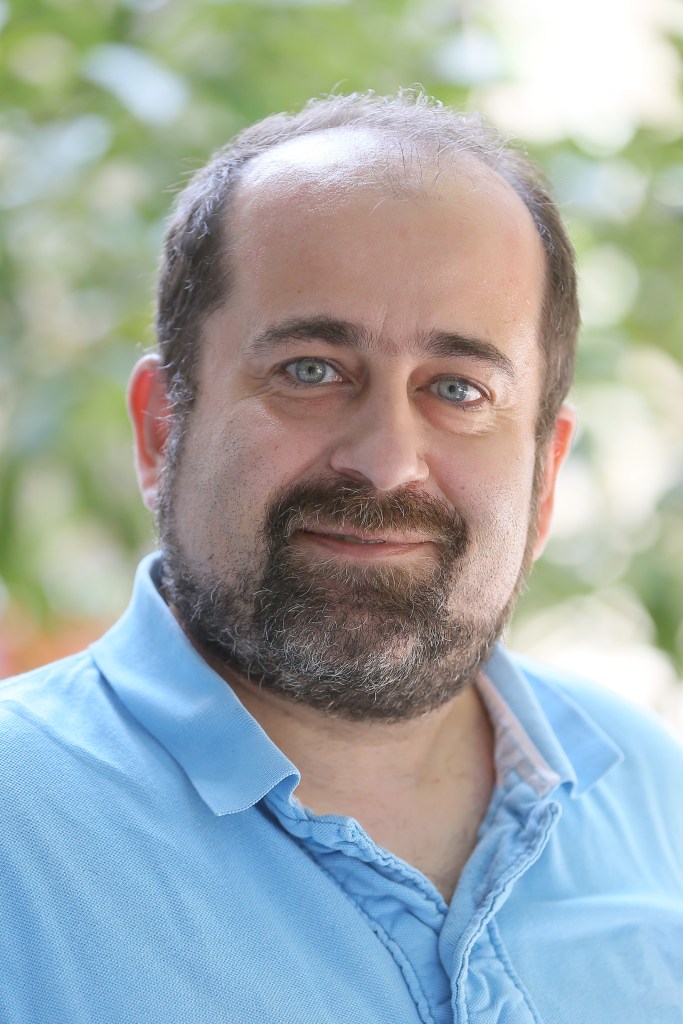

The first week of March 2026 marked the beginning of the LocalLing event, the kick-off meeting of our Revitalising Linguistic Diversity and Cultural Heritage Horizon programme. It was a busy and stimulating week, and difficult to capture fully in the space of a blog post. So what follows is an attempt to capture, however partially, some salient moments in the event, document the intellectual work that the event is facilitating, and foreshadow how the network moves forward.
What we did this week
Introductions and networking
Day 1 of this month-long meeting began, as such events do, with introductions, welcomes and networking events. This allowed us to get to know the meeting participants, who came from Colombia, Spain, Morocco, Tunisia, France, Togo, Cameroon, Romania and Estonia. Some more participants, who were unable to be with us in person, on account of travel disruptions and visa complications, were able to join us virtually.1


Partner presentations
One strand of the meeting focused on the linguistic ecologies of our partner countries. As each team presented their context, the sheer diversity of linguistic realities across the network became increasingly clear. It’s hard to summarise this richness in a few sentences, but the impression that stayed after the specific details2 faded was just how powerful it is to bring such vastly different traditions of knowledge into conversation.


The LocalLing publication agenda
A part of the meeting of which I was particularly proud was when I introduced what I envision as a publication programme that can grow out of the LocalLing project. This included two edited books, two special issues, and a collaborative position paper, which are intended to leverage the writing potential of our diverse group.
What I found most pleasing, however, was the explicit statement of what I consider important publication principles,3 as follows:
- Epistemic justice: We will encourage contributions from early-career researchers, practitioners, and scholars working outside dominant academic centres, alongside more established academics. Our work will recognise diverse forms of knowledge production, including practitioner research and classroom-based inquiry, as legitimate scholarly contributions.
- Language justice: While pragmatic considerations make English the primary language of publication, we will actively promote the visibility of less widely used languages. This may include multilingual abstracts, the inclusion of data excerpts in original languages, and explicit recognition of linguistic diversity in research contexts.
- Citational justice: We will commit to engaging substantively with scholarship produced in under-represented languages, regions, and knowledge communities. Authors will be encouraged to reflect critically on whose work is cited and whose perspectives may be missing.
- Cognitive justice: We will encourage methodological and epistemological pluralism, welcoming research that draws on diverse traditions of inquiry and knowledge-making rather than privileging a single model of scholarly evidence.


The library visit
One of the activities that I enjoyed the most was the visit to the University of Thessaly Central Library. This proved a welcome change of pace after several days of intense discussions and presentations, and an opportunity to explore a different side of the university. Our host, Agapi Polyzou, guided us through the building and introduced us to the work that goes on behind the scenes, and the visit quickly became one of the most pleasant moments of the week. Beyond the formal tour, what made the experience particularly enjoyable was the sense of shared curiosity in the group. People lingered over exhibits, asked questions, and compared notes about the kinds of materials that exist in their own institutions. It was one of those moments when the pace of the meeting slowed down a little and allowed for informal conversations and quiet discovery.


What we are beginning to learn
The most important insight from the meeting, at least for me, emerged during one of our networking activities. At one point, I found myself in conversation with three people whose perspectives on the themes of the meeting could hardly have been more different. One was a member of a minoritised linguistic community, and therefore approached the discussion from a deeply personal, insider perspective. Another was a political scientist, whose training provided a broader understanding of language policy, even if his engagement with linguistics itself was more limited. The third was a European linguist working with local communities in South America: an outsider, in many ways, carefully negotiating his way into their perspective.
What struck me in that moment was how bringing such different perspectives into proximity created affordances that none of us could have generated alone. This, I think, is the real power of interdisciplinarity. Interdisciplinarity does not occur simply because someone develops a passing interest in a neighbouring field, or borrows a concept that happens to illuminate the questions they already care about. It happens when we rely on the expertise of others, and when we allow their knowledge, their assumptions, and their ways of seeing the world to reshape our own understanding of the problem.
Moments like that, I suspect, are where the real work of LocalLing begins.
What comes next
In Week 2 of the project, we will focus mostly on capacity building and research training. This includes two professional development workshops and a training on research proposal writing, led by the University of Tallinn. It also includes a workshop on nexus analysis, which we will use as one of the proposed tools for researching less visible languages. Another day that I am looking forward to will focus on linguistic landscapes: this will involve a workshop, a guided tour of the Volos linguistic landscape, and a presentation of the linguistic landscapes of Estonia.
Also scheduled for next week (Tuesday) is a book presentation of the new book by LocalLing partner Fethi Helal, coauthored by Joe Lo Bianco, Language Politics in Tunisia: A Study of Language Ideological Debates (2025, Multilingual Matters).

Finally, throughout the week, we will be learning about our partners’ ongoing research. In a series of presentations, our partners from across the world will share overviews of the projects in which they are involved, and we will explore possible research collaborations. This promises to be an exciting week, and I am looking forward to sharing an update about it in a few days!
By subscribing to this blog, you will receive occasional updates on topics relating to language education, including my ongoing work on AI in language teaching and learning and on the research literacy of language teachers. (privacy policy)
Footnotes
- And you cannot believe how relieved I was that the zoom infrastructure worked! ↩︎
- Did you know that there are over 250 languages spoken in Cameroon? That the blue, green and yellow Amazigh flag represents the sky, mountains and desert of their land? That there are four types of forest in Sri Lanka? ↩︎
- You may recongise, in this, the influence of Sofia Tsioli’s thinking, as outlined in Tsioli (2025) and Tsioli and Kostoulas (2026). ↩︎

Every Language Is Someone’s World: Reflections on International Mother Language Day 2026
On International Mother Language Day, the real question is not which language we speak first, but what kinds of linguistic worlds we choose to protect.


Launching the Revitalisation of Linguistic Diversity & Cultural Heritage (LocalLing) project
LocalLing is a four-year international project bringing together researchers and educators from four continents to study, teach, and support local and heritage languages in socially just ways.

November 2025: Notes on Teaching, Research, and Writing
Tucked between October’s rush and December’s sparkle, November unfolds in steady academic labour.

About me
Achilleas Kostoulas is an applied linguist and language teacher educator at the Department of Primary Education, University of Thessaly, Greece. He holds a PhD and an MA in Teaching English to Speakers of Other Languages from the University of Manchester, UK and a BA in English Studies from the National and Kapodistrian University of Athens, Greece.
His research explores a wide range of issues connected with language (teacher) education, including language contact and plurilingualism, linguistic identities and ideologies, language policy and didactics, often using a Complex Dynamic Systems Theory to tease out connections between them. Some of his work in the field includes the research monograph The Intentional Dynamics of TESOL (2021, De Gruyter; with Juup Stelma) and the edited volume Doctoral Study and Getting Published (2025, Emerald; with Richard Fay), as well as numerous other publications.
Achilleas currently contributes to several projects that bring together his long-standing interests in language education, teacher development, and the social dimensions of language learning. As the coordinator of the expert team of AI Lang (Artificial Intelligence in Language Education), an initiative of the European Centre for Modern Languages of the Council of Europe, he works on developing principles and resources to help educators make informed, pedagogically grounded use of AI in their teaching. He also leads the University of Thessaly team of ReaLiTea (Research Literacy of Teachers), a project that supports language teachers in developing the capacity to engage with, and contribute to, educational research. Alongside these, he contributes to LocalLing, a Horizon-funded initiative to preserve and strengthen heritage and minority languages globally.
In addition to the above, Achilleas is the (co)editor-in-chief of the newly established European Journal of Education and Language Review, and welcomes contributions that explore the dynamic intersections between language, education, and society.
About this post
This blog is a space for slow, reflective thinking about applied linguistics language education, professional development, and the role of technology in language teaching and learning. Transparency about process, tools, and authorship is part of that commitment.
- I wrote this post on 8th March 2026. I will periodically revise it to ensure accuracy, so feel free to point out any issues that come to your attention.
- When writing this post, I used artificial intelligence to support copy-editing and Search Engine Optimisation. I wrote the text, and retain responsibility for analytical thinking, authorial decisions and wording.
- The views expressed here are personal and do not necessarily reflect those of the University of Thessaly or the LocalLing consortium as a whole.
- The photography in this post is by Dimitra Giannouka for the LocalLing project. These images are shared under a Creative Commons Attribution–NonCommercial–NoDerivatives (CC BY-NC-ND 4.0) licence. This means that the photographs may be shared and redistributed with appropriate credit, but they may not be used for commercial purposes or modified in any way.


Some links in this post are affiliate links. If you choose to buy a book from Amazon after visiting one of these links, Amazon will pay me a small commission (currently about 4.5%), at no additional cost to you. Amazon will, of course, know you came from here (which you may or may not find comforting). The commission helps support this blog: a small transfer from a billionaire’s pocket to the costs of keeping this space going. Alternatively, and always encouraged, please consider supporting an independent bookstore.ge: ‘Art and Writing’, by Wellspring Community School @ Flickr | CC BY

Leave a Reply