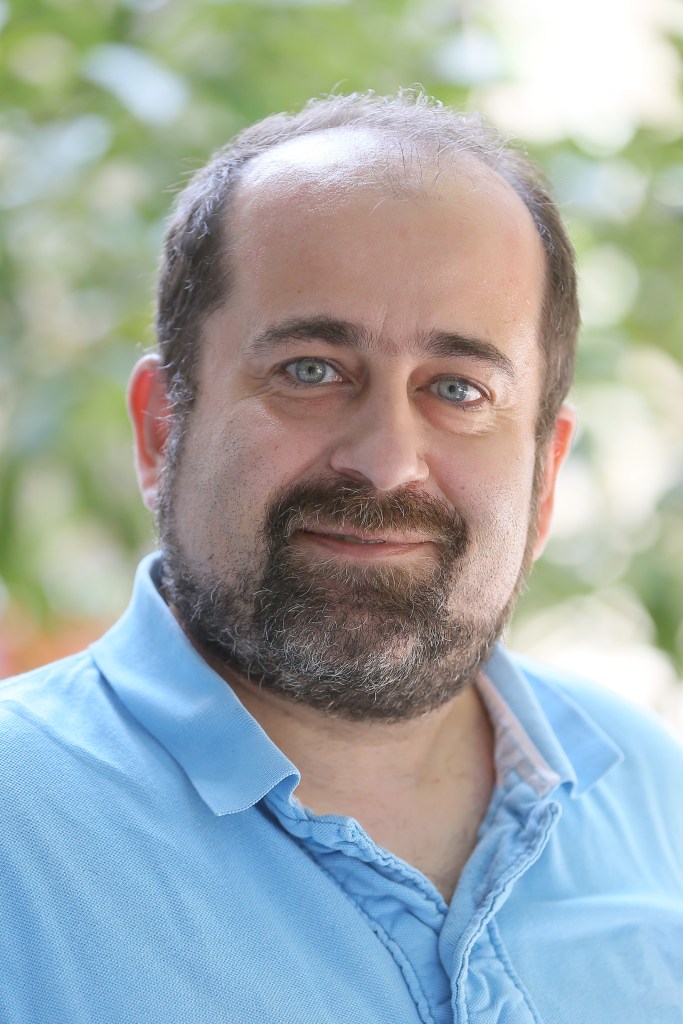

I am a relatively recent newcomer to academic blogging: I started my blog in January 2012 (although I did have a personal blog which I started in September 2006). Recently [in 2014], I crossed the 30,000 views landmark [update: as of 2024, the views counter is well over one million], which is perhaps a modest number, but enough to make me feel proud to write the following post, in which I share some reflections about academic blogging.
What follows, then, is by no means intended as an authoritative guide to academic blogging.1 Rather, it is simply my personal take on a number of straightforward questions people tend to ask me when they hear that I run a blog.
Time to read
Contents
Why write an academic blog?
In view of several unfortunate incidents involving academic bloggers [e.g, 1, 2], one might be forgiven for wondering what value there is in blogging that warrants risking one’s reputation. Some bloggers have found that a regular writing regime helps them to structure their thinking and to encourage their creativity. Others have noted that a blog is a suitable environment for ideas that are not quite ready for publication, or for ideas that are, for one reason or another, hard to publish. All of the above statements are true in my experience, and I would be lying if I said that the attention my blog attracts does not also flatter the narcissistic aspects of my personality.
Three reasons for academic blogging
These instrumental motivations aside, I think that what keeps me blogging boils down to three considerations:
- First, it helps me to participate in debates about topics which, to me at least, are of certain importance. Some of these exchanges may take place in my blog, but these days they will often extend to social media, such as Twitter or LinkedIn, and specialised academic fora, such as ResearchGate and academia.edu, where readers record reactions to what I have written, point out useful information, and generally help me to clarify my own thinking by engaging with my writing.
- Secondly, blogging helps me to share knowledge and experience, which I hope may be of use to others. Inger Mewburn and Pat Thomson have put this in better terms than I can aspire to. In their words: “We see [blogging] as a kind of scholarly ‘gift economy’ in which online mentoring, peer support and information sharing is the norm” (2013: 1115).
- Thirdly, it is important to me that the blog posts can reach a wide audience, without the constraints of corporate pay-walls or the obstancles of academic writing conventions. This potential audience includes not only the professional community we serve but also the ‘educated public’. I make no claim that this a wide audience will invariably benefit from what I have to say, or that they would otherwise be deprived of profound wisdom. However, I will put forward that, on account of their inherent openness and equality, blogs are fundamentally more democratic than other forms of scholarly debate and public engagement.
Their inherent openness and equality
makes blogs fundamentally more democratic
than other forms of scholarly debate and public engagement.
What can one blog about?
Mewburn and Thomson (2013) list nine functions served by academic blogs, namely: (i) self-help, (ii) descriptions of academic practices, (iii) offering technical advice, (iv) critiquing academic culture, (v) disseminating research, (vi) offering career advice, (vii) recording personal reflections, (viii) sharing information (e.g., about calls for papers or job vacancies), and (ix) offering teaching advice. What this typology highlights, I think, is the diversity of ways in which a blog can be useful. Practically, it would be unsound for a blog to try and cater to all these needs.
When it comes to deciding about your blog’s content, there are two considerations to keep in mind: focus and credibility.
Maintaining the focus of your blog
A blog that focuses on a specific niche is more likely to attract a strong audience among the people interested in that particular topic. Over time, a blog can become the primary point of reference for that type of information. Retraction Watch, which publishes news on retracted journal articles and the controversies surrounding them, and Scholarly Open Access (a.k.a. Beall’s List, [sadly defunct, as of 2018]), which reports on predatory journals, are good examples of very successful blogs that address very specific information needs.
It is sometimes easier to think of focus in terms of a target reader, rather than a topic area. At least this is the approach I have taken with my blog, in which I try to focus my content on what I perceive as the needs of MA and doctoral students in applied linguistics and language education. With this in mind, I blog about topical issues in foreign language education, offer advice on research methods and academic writing, and share information about upcoming conferences and publications. In addition to such ‘technical’ information, I also try to post content that might help early career researchers to immerse themselves in the broader debates surrounding academic life.
Maintaining credibility for your blog
With regard to credibility, it is important to realise that blogs exist in a dense ecosystem of information, which can make it hard for them to thrive. There are techniques for publicising one’s content, but ultimately, for this content to have any impact, readers need to be convinced that the information in one’s blog can be trusted. I would not advocate blogging exclusively about one’s field of research expertise (see below), and academic credentials are neither sufficient nor necessary for building credibility. However, it’s often easier to write with authority on the topics about which one cares, and about which one does have specialist knowledge.
One of the advantages of blogging, compared to more traditional forms of scholarly communication, is that it is well suited to making specialist knowledge relevant to readers outside the Ivory Tower. Alex Marsh, Professor of Public Policy at the University of Bristol, who specialises in housing, remarks that:
…if I only blogged about housing then my posts would be relatively few and far between. And I rarely report directly on research – either my own or that of others. More frequently I write op-ed commentary. […] And, if I’m honest, sticking to housing would rather defeat the object of setting up the blog in the first place. I wanted a place to talk about whatever was on my mind. So I also blog about closely related issues such as the welfare state and rights, social security and welfare reform, and land use planning.
Sometimes blogs can become “overtly political and resistant acts”. Whether or not one wants to assume such a role of public intellectual is, ultimately, a personal choice. However, for those who feel that public engagement is part of their professional identity, blogging can be a powerful medium.
So, to return to back to the original question (What might one blog about?) I guess the answer depends on the reason why you are blogging, and on what –in your opinion- might make a difference for your target audience.
How much time does academic blogging need?
There are three kinds of time costs associated with blogging. These are:
- setting up the blog;
- creating content; and
- engaging with readers.
This section looks into these time costs and discusses how they might impact academic productivity.
Setting up an academic blog
Perhaps surprisingly, setting up a blog is the easiest of these tasks. If one uses a hosting service (like WordPress.com, which hosts my blog), many of the technical aspects of blogging can be dealt with in just a few mouse-clicks. These include finding hosting space, reserving a domain name, and choosing a functional and aesthetically pleasing template. This comparison chart, which compares various blogging platforms can help you decide which is more suitable to your needs.
Running a self-hosted blog, or a blog hosted by one’s institution will likely offer you greater flexibility. This is a technically more complicated option, but it is not prohibitively so. The actual time needed to set up a blog will depend on how willing you are to explore various templates and functional configurations, as well as your technical expertise.
For all it’s worth, it took me a single evening to set up mine, followed by a few more half-hour sessions tweaking its layout and colour scheme.
Creating content
Regarding content creation, the time needed depends on how regularly you update the blog, and what kind of content you create.
At my busiest, I tried to upload three to five new posts per week, which meant that I had to spend between three and five hours researching, writing and revising. I tended to do this in two blocks of time per week. I used one block for a long post,2 which often involved some research and several revisions. Here’s an example of such a post.
In the other block, I wrote several smaller pieces, such as calls for papers, summaries of articles I had recently read and so on. You can see some examples below. I usually did this work over the weekend, and then scheduled the posts to appear at set times throughout the coming week, which meant that I didn’t have to work on the blog daily.
Engaging with readers
Engaging with readers involves monitoring social media for reactions to what I have written, and responding to any comments there or in the blog. For me, this rarely requires more than 10-15 minutes per day, although I may on occasion spend more time to reply to occasional comments that are particularly interesting.
Fiding time
Does this all impact my academic productivity? I think that is a somewhat misleading question, because it assumes that any time I spend on the blog would be spent producing publishable output.
Personally, I have stuck to the principle of working on my blog during my own time, when I could perhaps be watching television, working out, or browsing the internet. I will concede that I was less productive academically when I was most engaged with the blog (which is, in part, why I have now slowed down on content production). However, I am not sure that this was due to the blog taking over ‘writing’ time.
Rather, the blog provided me with a creative outlet when I was, for whatever reason, unable to write for publication. That said, I think that much of the effort I put in the blog did feed back in my academic work and teaching, so in a sense it may have increased my productivity.
Are there any pitfalls to avoid?
It should, by now, be clear that I have strong positive feelings about academic blogging. However, I am also aware (and so should you) but that that bloggers (especially Early Career Researchers) must be careful with all forms of public speaking.
In what follows, I will ignore the obvious risks associated with libel law, or the non-trivial consequences of speaking truth to power, as I assume that readers are aware with the implications of making comments in public. Instead, I will focus on potential ways in which perceptions about blogging, and the actual content of the blog might prove detrimental to bloggers.
Your academic blog and your university and colleagues
Many universities nowadays encourage academics to blog, while others are somewhat more cautious (e.g., 1 2). So, it is probably best to check with one’s employers’ social media policy before embarking on a blogging project. It is always a good idea to explicitly state that the views in your blog are personal and do not reflect the views of your employers or professional organisations.
Some academics also frown upon blogging, which they feel to be ‘self-aggrandising’ behaviour. As one academic found out the hard way: “The take was that it was not academic, that it was quite populist and that was a problem (…) that if I had time to do extra work then I should be writing grant applications”. Others might feel intimidated by the suspicion that you “might air departmental dirty laundry (real or imagined) on the cyber clothesline for the world to see”. It is, however, encouraging that such views appear to be on the decline.
Your academic blog
and the permenance of writing
Complications relating to content are more serious, and mostly relate to the fact that once posted, the content is no longer in one’s control. This means that anyone might use your content, perhaps including people with whose practices and agendas academics are always not accustomed to dealing.
Sometimes people might plagiarise content from your academic blog, or you might find yourself misquoted in media with large readerships. In other cases, you might find that someone has reproduced your content accurately and with proper attribution, but published it in a context that you find objectionable. This could create that awkward impression that you publish with an entity that you do not endorse.
I could try to create a comprehensive list of unpleasant eventualities, but the impact of online content creation is simply unpredictable, as one blogger found out when he transcribed a impromptu comment made by Slavoj Zizek at an academic conference, only to find himself unwillingly involved in a squabble between the Slovenian philosopher and Noam Chomsky.
Your academic blog and trolls
It is equally possible, and probably more distressing, that publicly made comments might attract unwanted attention by internet activists, or by trolls, which could potentially spread into real life as well.
For me, this has not been an issue so far. This is perhaps because I spent parts of my early career among imaginative, creative and honest students in secondary education, so I have perhaps become desensitised to how the ways in which such qualities can combine in pleasant and unpleasant ways.3
On the other hand, TV presenter and academic Mary Beard, who recently became the target of online abuse, has commented that “it would be quite enough to put many women off appearing in public, contributing to political debate, especially as all of this comes up on Google”.
This is by no means a risk limited to blogging: Mary Beard’s unfortunate experience was the aftermath of an appearance on television, and other academics have found themselves in vulnerable situations after writing for the traditional media, but the immediacy of online communication could mean that these dynamics are amplified when it comes to blogging.
Some concluding thoughts
On re-reading these comments, I realise that there is a risk they might put people off blogging, which is why I feel it is important to put such risk into perspective. In my experience, and that of many people I know, blogging has consistently proved to be an intellectually stimulating and enjoyable experience. I have not found it to be any more problematic than other ways of participating in public debate. I understand these are not risks which everyone is willing to take, but for me, at least, readiness to make a stand on topics about which I cares, and about which I can confidently make an informed contribution, is an important part of my academic identity.
Notes
- If you are interested in that, I’d invite you to read Simon Wren-Lewis’ excellent Advice for potential academic bloggers. ↩︎
- Nowadays (2024) this is called ‘evergreen’ content. Evergreen content is content that is relevant to readers over a long period of time. This is contrasted to content that is topical or time-bound (e.g., a call for papers). ↩︎
- Although I was not fully aware of it when I originally wrote this post, online flaming is also a gender and class related. As a while male, I am probably less vulnerable to the most vitriolic forms of flaming. ↩︎

About me
Achilleas Kostoulas is an applied linguist at the University of Thessaly in Greece. He holds a PhD from the University of Manchester, UK. He is author, co-author and editor of several books on language teaching and language teacher education, including The Intentional Dynamics of TESOL (2021, De Gruyter) and Challenging Boundaries in Language Education (2019, Springer), as well as multiple journal articles.
About this post
This post was originally commissioned by the LSE Impact of Social Sciences blog, and it appeared here on 26 July 2014. The most recent update took place in July 2024 (copyediting, SEO, and formatting changes). The featured image, by Adobe Stock, is used with license. The content of the post expressed here does not represent the views of the University of Thessaly or the University of Manchester, with which I was affiliated at the time.


Leave a Reply