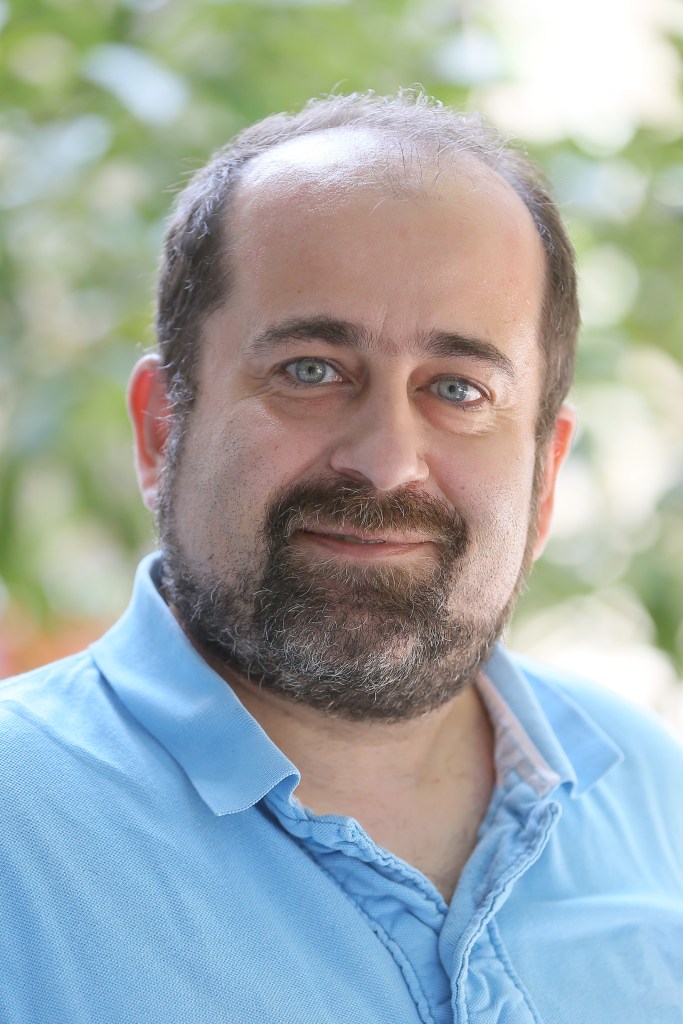

Some of you may know that I have recently become involved in teaching at the Language Education for Refugees and Migrants (LRM) postgraduate course, offered by the Hellenic Open University. I suppose it was only natural that I found an academic home where I could bring together language teacher education, an area of work where I feel I can contribute meaningfully, and working with vulnerable populations, a cause about which I care deeply. I would like to take this opportunity to say a few words about our programme, which may be of interest.

The LRM programme
The Language Education for Refugees and Migrants MA programme aims to help teachers develop the knowledge and skills that they will need when working with learners who have a refugee or migrant background. Such classes are special in many ways. Perhaps the most important of these is the very diverse cultural and linguistic capital that learners bring to the classroom. Compared to traditional ELT and second language classes, this creates a very different set of learning opportunities. Another thing that sets these learners apart is the precarity of their situation. This means that finding ways to empower them is an important priority. Thirdly, in many contexts around the world, refugee and migrant education is highly decentralised. This means that teachers need a heightened ability and confidence to work autonomously.
What makes LRM unique
In the LRM programme, we try to address such needs in multiple ways. For example, we place a strong emphasis on using translanguaging pedagogy. This means that we want to help participants develop the ability to capitalise on the diverse linguistic repertoires that they and their learners bring to the language classroom. We also draw on critical education theory to help teachers reflect on how linguistic policies and teaching practices impact the lives of our learners. We believe that all teaching, and language teaching in particular, should challenge unjust orders, and we work with teacher participants to help unlock this potential.
All teaching, and language teaching in particular, should challenge unjust orders
Another key feature of the programme is that we encourage participating teachers to continuously reflect on their practice. To that end, we use classroom-based research as a lens through which to think about their professional choices. Other strands of our work include broadening the knowledge base of participating teachers with information about international law, as it applies to refugees, Arabic language and culture, and more.
We believe that upon the successful completion of the programme, our graduates will be able to engage with classes of refugee and migrant learners with confidence and authority; that they will be able to make an evidence-informed assessment of their needs and learning affordances, design appropriate intervention programmes, implement them in ways that make a difference, and continue to develop by reflecting on their teaching experience.

Taking part in the LRM programme
The Language Education for Refugees and Migrants programme is delivered online. For the most part, participating teachers engage with online learning materials individually or in groups. There are also regular online meetings with the course tutors.
Modules
There are nine taught semester-length modules in the course, as well as a teaching placement and a dissertation. You can enroll in one to three modules every semester, to suit your own learning pace and other commitments.
The modules that make up the programme are the following:
- LRM50 Applied Linguistics and Second Language Acquisition
- LRM51 Migration, Multilingualism and Intercultural Communication
- LRM52 Critical Pedagogy
- LRM53 Language Teaching for Adult Refugees and Migrants
- LRM54 Language Teaching for Children with Refugee or Migrant Background
- LRM55 Design and Development of Educational Material and Digital Media
- LRM60 Introduction to Arabic Language and Culture
- LRM61 Human Rights and International Law for Refugees and Migrants
- LRM62 Research Methodology in Multilingual Contexts
- LRM63 Teaching Placement (Practicum)
- LRM64 Dissertation
Teaching Placement
Towards the end of the course, you will do a teaching placement. This takes place in a school (or a similar organisation) that provides language lessons for refugees and migrants. You can choose the host organisation on your own, depending on where you live.
For an insight into what this involves, you can have a look at the post below. By the way, the teaching placement is the part of the programme for which I am directly responsible, so I may be able to help with any questions you have.
MA Dissertation
The programme concludes with the submission of an MA dissertation. This is a research-based, conceptual or practical project where you share your developing expertise on language education for refugees and migrants. You can read about some of our participants’ research by clicking on the link below.
Find out more
If you’re interested in finding out more about the programme, you can contact lrm [at] eap [dot] gr. Our administrators will be happy to provide you with any information you need and answer any questions you have. Alternatively, if you’d like to get in touch directly with me, I’ll be glad to hear from you!
Admission requirements
- This is an English-language programme, so we expect participants to have a strong command of academic English (C1 in the CEFR, or better).
- Besides English and their native language, participants should also have a working knowledge (A1 or better) of one more language. This could be another European language or Arabic or Farsi.
- You will also need to have a BA-level degree from an accredited higher education institution.
Before you go If you know of anyone who might be interested in taking part in this MA programme, please feel free to share this post.

Inclusion beyond translation: A conversation with Maria Cioé-Peña
What can a teacher do when thirty children bring different languages, cultures, and needs into the same classroom? Drawing on a ReaLiTea podcast, this post considers culturally sustaining pedagogy, multilingual ecologies, multimodal meaning-making, and the unresolved gap between inclusive principles and classroom practice.


Schoolscapes Aren’t Neutral: Language Teaching for Inclusion
This post explores ways in which language teachers can engage learners through schoolscapes, i.e., posters, signs, and visual texts that shape language ideologies. With real-world examples, it shows how classrooms can reflect and promote multilingual inclusion.

Making a difference: The LRM teacher placement
My primary role in the Language Education for Refugees and Migrants programme is to coordinate the teching placement module. This post outlines what this involves, and why I think it is important.

About me
Achilleas Kostoulas is an applied linguist and language teacher educator at the Department of Primary Education, University of Thessaly, Greece. He holds a PhD and an MA in Teaching English to Speakers of Other Languages from the University of Manchester, UK and a BA in English Studies from the National and Kapodistrian University of Athens, Greece.
His research explores a wide range of issues connected with language (teacher) education, including language contact and plurilingualism, linguistic identities and ideologies, language policy and didactics, often using a Complex Dynamic Systems Theory to tease out connections between them. Some of his work includes the research monograph The Intentional Dynamics of TESOL (2021, De Gruyter; with Juup Stelma) and the edited volume Doctoral Study and Getting Published (2025, Emerald; with Richard Fay), as well as numerous other publications.
Achilleas currently contributes to several projects that bring together his long-standing interests in language education, teacher development, and the social dimensions of language learning. As the coordinator of the expert team of AI Lang (Artificial Intelligence in Language Education), an initiative of the European Centre for Modern Languages of the Council of Europe, is active in developing principles and resources to help educators make informed, pedagogically grounded use of AI in their teaching. He also leads the University of Thessaly team of ReaLiTea (Research Literacy of Teachers), a project that supports language teachers to engage with, and contribute to, educational research. Alongside these, he contributes to LocalLing (Revitalisation of Linguistic Diversity and Cultural Heritage), a Horizon-funded initiative to preserve heritage and minority languages globally.
In addition to the above, Achilleas is the (co)editor-in-chief of the European Journal of Education and Language Review, and welcomes contributions that explore the dynamic intersections between language, education, and society.
About this post
This blog is a space for slow, reflective thinking about applied linguistics, language education, professional development, and the role of technology in language teaching and learning. Transparency about process, tools, and authorship is part of that commitment.
- I wrote this post in November 2020. I revise it from time to time to reflect the changes in the LRM Programme. The last revision took place on 21 April 2026.
- When writing this post, I used artificial intelligence to support copy-editing and Search Engine Optimisation. I wrote the text, and retain responsibility for analytical thinking, authorial decisions and wording.
- The content of this post does not reflect the views of the HOU administration.


Leave a Reply