
Perhaps you’ve come across the following line, from Louise Glück’s Nostos:
We look at the world once, in childhood.
The rest is memory.
I imagine it means different things to different people, but one of the thoughts it brings to my mind is that acts of looking back are always mediated, partial, and shaped by whatever has remained. It signals that coherence is something we establish in retrospect, and this end-of-year reflection is my attempt to do so by taking stock of things that happened in this blog in the last 12 months or so.
This is not meant as a highlights reel or a ‘best of 2025’ post. There will be no discussion of metrics and rankings, no claims about impact and growth, and I will make no attempt to extract lessons and repackage them as advice. What I am trying to do is a provisional ordering of memories, shaped as much by what is absent as it is by what is present. I will try to sketch the kinds of questions that kept returning, the kinds of writing this space seemed to make possible, and the kinds of work the blog ended up doing (often indirectly, and often beyond what any metrics can easily capture).
What the blog has become
When I started blogging in 2010, I was responding to institutional expectations for ‘outreach’ and engaging broader audiences. Over time, however, this blog has evolved into a semi-public thinking space, a shared notebook of sorts, which sometimes exceeds its immediate audience and purposes.
I now think of this blog as a space that is deliberately slower than social media, and also less thin and less performative. It’s not that you never encounter ‘I-am-delighted-to- announce…’ posts here, but there is (I hope) also substance added to the performative move. This is not to deny the value of social media in knowledge ecosystems: I often find useful publications and calls for papers there. But the kinds of writing (and the kinds of thinking that writing enables) that matter to me fit uncomfortably into those formats. They need, I think, some more room and a little less pressure to announce themselves. This blog has become a way of making that room.
I also like to think this blog complements my academic publishing. For all its value as a format for scholarly dialogue, academic writing is necessarily slow and constrained, and it is framed by expectations that are not always under my control. For many readers, academic publications are also hard to access because of the language I use, because of the format expectations, and because of paywalls. One quiet satisfaction has come from revisiting publications in reader-friendly ways (e.g., this post on Complex Systems in Language Education). Judging by the metrics, such posts seem useful to a range of readers, and I take some pride in that they are occasionally used as course readings in different parts of the world.

Ideas that kept returning in 2025
Perhaps unsurprisingly, a lot of what I write relates to the projects to which I contribute. In this sense, the blog has become more focused than it was in the past, and I am aware that it has shifted away from its earlier emphasis on English language teaching. I suppose this is just as reflection of how I, too, have grown over time.
Research literacy as a stance
I have been writing about topics such as classroom-based research and the research engagement of teachers for about ten years. This has been a core concern for me, because it is my way of challenging the two-tier stratification in language education, with unequal positioning of researchers and teachers. Increasingly, I have been thinking of research literacy as a stance, rather than a collection of skills, and I have tried to articulate this in some of my recent posts.

Empowering language teachers through AI and research literacies workshop
The joint ReaLiTea and AI Lang workshop took place in Larissa, Greece on 6th December 2025.

Empowering Language Teachers: The Research Literacy Framework
What is language teacher research literacy? In this post, we present an article that defines research literacy and talks about a framework that can designed to support teachers’ professional growth.

Making Research Work for Language Teachers
This post discusses the importance of teacher research in language education, arguing that teachers actively engage in research-like activities, even if they don’t label it as such.
AI as infrastructure
My interest in artificial intelligence is more recent – besides, few of us would have imagine how quickly AI would disrupt our ways of teaching and learning languages. A lot of the work we do in the Artificial Intelligence for language education project views AI as infrastructure for language education, rather than an enhancing add-on or an existential threat. Some posts that capture this thinking are the following.

The Artificial Intelligence in Language Education (AI Lang) workshop
Notes about the ECML-organised Workshop of the AI Lang project (November 2025)

The AI ‘alignment problem’ in language education and applied linguistics
Drawing on a recent publication (Curry et al., 2025), this post reflects on how AI aligns (or fail to align?) with the epistemological, ontological, and ethical values of applied linguistics and language education.

Language Education in an AI-Driven World: Reflections from the ECML Coordinators’ Meeting
The AI Lang project, presented at the ECML meeting in Graz, aims to enhance language education through AI by developing guidelines, training resources, and fostering collaboration among educators for future workshops.
Writing and academic voice
During November 2025, I used the Academic Writing Month as a prompt to write a series of posts connected to writing. I guess that the ideas in these posts have been with me for a while, and many of my Master’s students will have found them recognisable. In this sense, perhaps this month was an opportunity to slow down and consolidate familiar ideas into a more explicit form.

Writing as Theorising for Language Education
This post explores theorising for practice in language education, showing how reflective and reflexive writing help teachers connect classroom experience with theory to develop situated, evidence-informed understandings (small-t theories) of their professional practice.

Writing Together: Reflections on the Craft, Dynamics, and Politics of Co-Authorship
This post explores the forms, tools, and ethics of collaborative writing, reflecting on what co-authorship teaches us about trust, dialogue, and the shared making of scholarly identity.

Epistemic Vigilance in Language Education: Thinking with Machines
When a conversation with ChatGPT about blog analytics turned unexpectedly philosophical, it led me to reflect on epistemic vigilance ( i.e., the practice of questioning, testing, and refining knowledge) and its role in language teacher education.
Language policy and ideology
Another recurring thread in my thinking has revolved around the role of languages in our lives. This involved explorations of language ideology and language policy, as well as reflections about the visibility of languages in our public spaces. These concerns, which reappear across language educations, sometimes with different labels, are core to my intellectual orientation, even though they do not explicitly connect to any specific research project. For me, the blog offered a space to explore them without the constraints of formal academic writing, and this –in turn– made it possible to foreground their ethical and political dimensions more explicitly.

Emergency Language Policy in Greece: Notes From a Decade of Crisis
Greece’s Emergency Language Policy offered rapid, support for refugee learners, yet its ad hoc design and monolingual assumptions limited deeper transformation in language education.

European Day of Languages 2025: What Are We Really Celebrating?
Beyond posters and slogans, what does the European Day of Languages really mean? This post reflects on how we might move from symbolic recognition to genuinely sustaining the plurality of voices that shape contemporary Europe.

Schoolscapes Aren’t Neutral: Language Teaching for Inclusion
This post explores ways in which language teachers can engage learners through schoolscapes, i.e., posters, signs, and visual texts that shape language ideologies. With real-world examples, it shows how classrooms can reflect and promote multilingual inclusion.
What resisted attempts to write
Some of the hardest posts to write this year were not those that demanded technical precision, but those that resisted easy positioning. Writing critically about popular discourses (e.g., wellbeing, innovation, AI) comes with a particular kind of friction. The risk is not so much backlash as misrecognition as someone as contrarian, negative, or out of step with the times. What makes this difficult is that critique, in such contexts, is easy to mistake for refusal.
At times, it felt as though the real challenge lay in navigating the nuances of these subjects while resisting pigeonholing. Questioning assumptions can seem as lack of tolerance; slowing things down can appear as obstruction; withholding enthusiasm can look like disengagement. Yet, what motivated me to write such posts was precisely the concern for the consequences of unexamined enthusiasm, and for the dangers of reducing complex educational questions to matters of attitude, mindset, or technological uptake.
Holding a consistent line between critique and dismissal required more care than I had anticipated. It has meant writing in a register that neither flatters nor provokes, and accepting that such writing may never travel particularly far. Still, it felt necessary to make space for it here, even if its value lies less in immediate reception than in its ability to remain available, as a point of reference, when the initial excitement has passed.
What seems to be emerging
If there is a forward orientation here, it is not a plan so much as a set of inclinations.
I remain interested in writing that takes its time, even when this works against visibility. I am increasingly drawn to posts that clarify rather than persuade, and to questions that cannot be closed too easily.
This has also meant a gradual loosening of my investment in audience size as a proxy for value. That is to say, I have become less interested than I once was in chasing attention, and more interested in remaining intelligible to the readers who do arrive, often through routes that are hard to trace. often belatedly, and often quietly.
Whether this is sustainable in the long term is an open question. For now, it feels necessary as a way of holding open a space for thought that does not need to justify itself through speed, scale, or immediate uptake.
But you know this already
You and the others who think
you live for truth and, by extension, love
all that’s cold.
Louise Glück, Lamium (1992)

About me
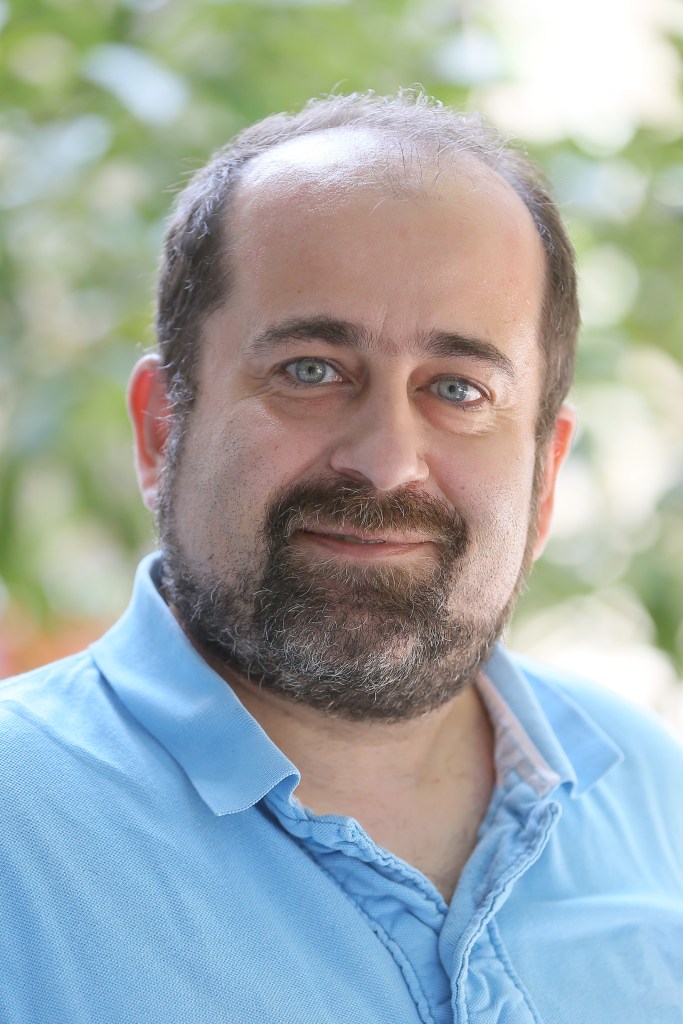
Achilleas Kostoulas is an applied linguist and language teacher educator at the Department of Primary Education, University of Thessaly, Greece. He holds a PhD and an MA in Teaching English to Speakers of Other Languages from the University of Manchester, UK and a BA in English Studies from the National and Kapodistrian University of Athens, Greece.
His research explores a wide range of issues connected with language (teacher) education, including language contact and plurilingualism, linguistic identities and ideologies, language policy and didactics, often using a Complex Dynamic Systems Theory to tease out connections between them. Some of his work in the field includes the research monograph The Intentional Dynamics of TESOL (2021, De Gruyter; with Juup Stelma) and the edited volume Doctoral Study and Getting Published (2025, Emerald; with Richard Fay), as well as numerous other publications.
Achilleas currently contributes to several projects that bring together his long-standing interests in language education, teacher development, and the social dimensions of language learning. As the coordinator of the expert team of AI Lang (Artificial Intelligence in Language Education), an initiative of the European Centre for Modern Languages of the Council of Europe, he works on developing principles and resources to help educators make informed, pedagogically grounded use of AI in their teaching. He also leads the University of Thessaly team of ReaLiTea (Research Literacy of Teachers), a project that supports language teachers in developing the capacity to engage with, and contribute to, educational research. Alongside these, he contributes to LocalLing, a Horizon-funded initiative to preserve and strengthen heritage and minority languages globally.
In addition to the above, Achilleas is the (co)editor-in-chief of the newly established European Journal of Education and Language Review, and welcomes contributions that explore the dynamic intersections between language, education, and society.
About this post
- I wrote this post on 29th December 2025, to mark the end of my 15th year of academic blogging. I may revise it from time to time to ensure accuracy, update links or improve clarity, without changing the content in any substantive way. Feel free to point out any typos, language infelicities or places where I might write the text more clearly.
- I made limited use of AI for copyediting and improving the Search Engine Optimisation of the text. The content of the post is my own work, and authorial responsibility rests with me.
- The content of the post does not reflect the views of the University of Thessaly or any past employers.
- The featured image is the work of Daphnusia @ Adobe Stock and I am using it with license. The photo of the lamuim, by Jorge Urosa @ Pexels, is free for use. The verses from Louise Glück’s poems are quoted for illustrative and reflective purposes, in connection with a discussion of my own academic practice.

Leave a Reply