
The European Journal of Education and Language Review [EJELR], which I co-edit, invites papers for our upcoming issues. As I wrote in our last editorial, we envisage this journal as a space for opening up discussions about how language and language education connect with questions of power. If you feel that your work fits well with the journal’s scope and mission, what follows may be of interest to you. As a reminder, the EJERL is a diamond open-access journal: this means that the work you publish with us will not be behind a paywall, and you will not have to pay article processing charges. If you’d like an informal chat to discuss a potential submission, feel free to reach out to me!
Call for papers
We live in fractured times. Acts of exclusion, and occasionally violence, rooted in fear of difference, the retreat of linguistic human rights in the face of technocratic, the deployment of linguistic ‘deficits’ as proxies for discrimination, and the positioning of multilingualism as threat all serve to remind us that language is never neutral. We are keenly aware that language is the medium through which fear is amplified, difference is essentialized, and hatred finds legitimacy. And yet we also take note of how it allows solidarity to be built, resistance to become possible, and alternative futures to be imagined (Steiner, 1998). Accepting that language does things in the world (Holtgraves, 2002) means that scholarship about language cannot stand apart from questions of justice, belonging, and democratic coexistence.
It is within this context that the European Journal of Education & Language Review (EJELR) positions itself: not as a neutral record of language and language education, but as a space for scholarship that takes the social consequences of our work seriously (Pennycook, 2021). Accordingly, the work published in EJELR recognises language users, teachers, and learners as people with plurilingual identities, vulnerabilities, and aspirations, navigating worlds where language learning intersects with class, race, gender, migration status, and —at times— trauma. Our commitment is to scholarship that foregrounds ethical responsibility, care, wellbeing, and social justice as core educational concerns, understanding that linguistic diversity is rarely neutral but rather accompanied by linguistic stratification and subordination (Piller, 2016).
Language, education, & social consequence
The European Journal of Education and Language Review (EJELR) invites submissions for articles that interrogate how language education and its informing disciplines (e.g., applied linguistics, language teaching psychology and education studies) connect with questions of power, inequality, identity, and social responsibility.
We are keen to receive submissions that:
- Describe language education as a site of social stratification, inclusion, and exclusion, and critically interrogate dominant narratives in language policy and language ideologies;
- Foreground the experiences of language users, teachers, and learners as plurilingual, multicultural people navigating intersections of class, race, gender, migration status, and trauma;
- Frame language teacher education and professional knowledge as ethically and politically situated, and reflect on questions of agency, accountability, and research literacy;
- Outline educational responses to migration, mobility, and linguistic diversity, and challenge deficit framings;
- Question technocratic, decontextualized approaches, and foreground ethical responsibility, care, safety, and social justice.
The journal explicitly welcomes submissions from early-career researchers, including doctoral candidates and scholars at the beginning of their academic trajectories. We recognise that transformative work often emerges from positions of professional precarity, and we are committed to a rigorous but constructive review process that supports the development of such scholarship, without lowering expectations of empirical rigour, conceptual clarity and methodological integrity.
Topics of Interest
EJELR welcomes empirical studies, conceptual and theoretical papers, methodological reflections, and critical reviews that open up new problem spaces. We encourage interdisciplinary contributions, provided that language and education remain central analytical concerns.
We are keen to receive submissions that speak to, and extend, debates around topics such as:
- Language education and social justice;
- Migration, citizenship, and linguistic rights;
- Multilingualism and translanguaging practices;
- Identity, belonging, and positioning in language learning contexts;
- Structural inequalities in language education access and participation;
- Critical examination of language policies and their consequences;
- Resistance to assimilationist and monolingual ideologies;
- Language teacher education for transformative practice;
- Under-researched linguistic communities and minoritized languages;
- Language and wellbeing in contexts of displacement;
- Action research and practitioner inquiry in socially-engaged language education.
Methodological Approaches
EJELR affirms epistemic diversity and welcomes a range of methodological perspectives (e.g., qualitative, quantitative, mixed-methods, arts-based research, auto- and duo-ethnography, classroom-based inquiry, and other innovative approaches). We especially encourage research designs that amplify marginalised voices and challenge conventional research paradigms.
Submission Guidelines
Manuscripts must present original work not under consideration elsewhere and will undergo double-blind peer review. Authors should follow the journal’s author guidelines and adhere to ethical standards regarding research transparency, data protection, and responsible scholarly practice.
Informal queries regarding scope or suitability may be addressed to the editorial team via the In.
EJELR is a diamond open-access journal committed to making scholarship freely available to educators, researchers, and communities worldwide.
We look forward to reading your work!
References
Holtgraves, T. M. (2002). Language as social action: Social psychology and language use. Lawrence Erlbaum Associates.
Pennycook, A. (2021). Critical applied linguistics: A critical introduction (2nd ed.). Routledge.
Piller, I. (2016). Linguistic diversity and social justice: An introduction to applied sociolinguistics. Oxford University Press.
Steiner, G. (1998). After Babel: Aspects of language and translation (3rd ed.). Oxford University Press.
You may be interested in these posts

September 2026: Notes on Care (Besorgen and Fürsorge)
Notes on September 2026: a finished chapter and a finished manuscript, an AI Literacy meeting in Graz, ReaLiTea’s final stretch, LocalLing visits from Cameroon to Tallinn, and a sabbatical that keeps filling up with travel.


How to write a peer review
Notes on writing peer reviews that help editors decide and authors act, and honest thoughts on where AI can, and can’t, responsibly help.

European Journal of Education & Language Review, Issue 1
A few words about the inaugural issue of the new journal I co-edit, the European Journal of Education and Language Review.

About me
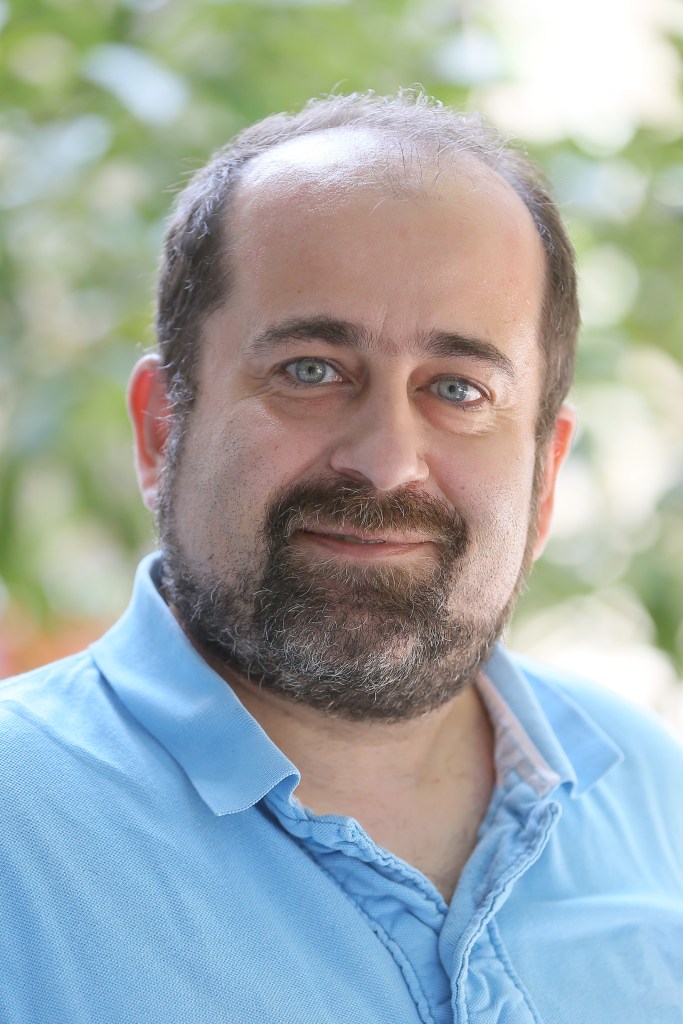
Achilleas Kostoulas is an applied linguist and language teacher educator at the Department of Primary Education, University of Thessaly, Greece. He holds a PhD and an MA in Teaching English to Speakers of Other Languages from the University of Manchester, UK and a BA in English Studies from the National and Kapodistrian University of Athens, Greece.
His research explores a wide range of issues connected with language (teacher) education, including language contact and plurilingualism, linguistic identities and ideologies, language policy and didactics, often using a Complex Dynamic Systems Theory to tease out connections between them. Some of his work in the field includes the research monograph The Intentional Dynamics of TESOL (2021, De Gruyter; with Juup Stelma) and the edited volume Doctoral Study and Getting Published (2025, Emerald; with Richard Fay), as well as numerous other publications.
Achilleas currently contributes to several projects that bring together his long-standing interests in language education, teacher development, and the social dimensions of language learning. As the coordinator of the expert team of AI Lang (Artificial Intelligence in Language Education), an initiative of the European Centre for Modern Languages of the Council of Europe, he works on developing principles and resources to help educators make informed, pedagogically grounded use of AI in their teaching. He also leads the University of Thessaly team of ReaLiTea (Research Literacy of Teachers), a project that supports language teachers in developing the capacity to engage with, and contribute to, educational research. Alongside these, he contributes to LocalLing, a Horizon-funded initiative to preserve and strengthen heritage and minority languages globally.
In addition to the above, Achilleas is the (co)editor-in-chief of the newly established European Journal of Education and Language Review, and welcomes contributions that explore the dynamic intersections between language, education, and society.
About this post
This blog is a space for slow, reflective thinking about applied linguistics, language education, professional development, and the role of technology in language teaching and learning. Transparency about process, tools, and authorship is part of this commitment.
- I wrote this post on 6th February 2026. I will periodically revise it to ensure accuracy, so feel free to point out any issues that come to your attention.
- When writing this post, I used artificial intelligence to support copy-editing and Search Engine Optimisation. I wrote the text, and retain responsibility for analytical thinking, authorial decisions and wording.
- The views expressed here are personal and do not necessarily reflect those of the University of Thessaly or any other entity with which I am affiliated.
- The featured image is by farizun amrod, who is sharing it with a license from Adobe Stock.

Leave a Reply