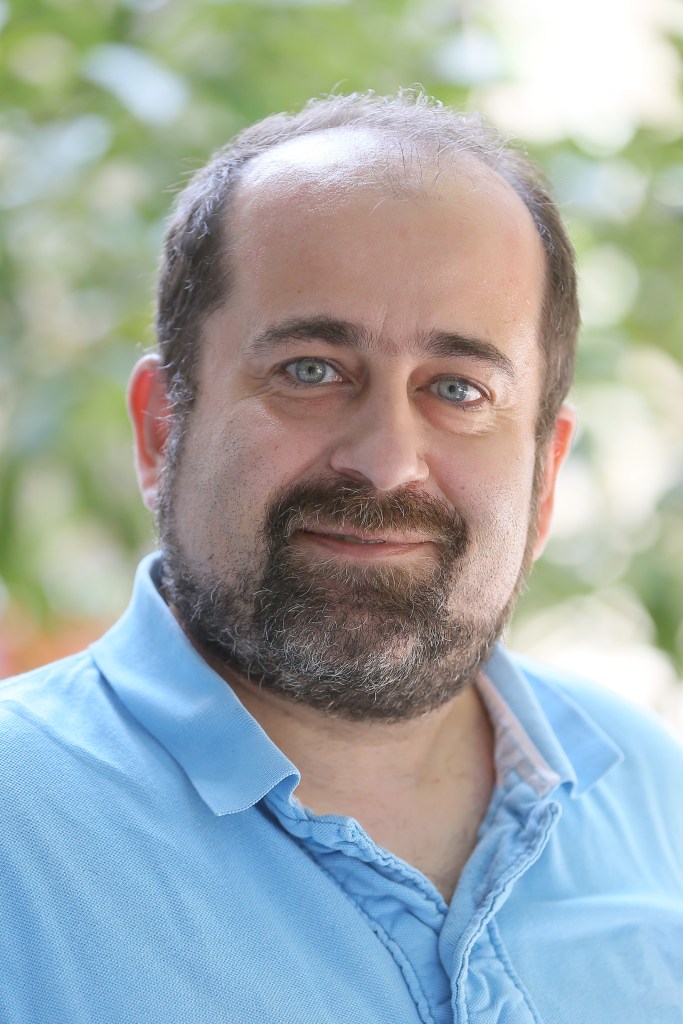

Even when it’s busy, February is my favourite month of the year. The hardest part of the academic calendar is behind you, the days grow longer, almond trees blossom, and you find yourself surrounded by the early signs of spring. This February, in particular, is marked by bustling activity that has kept us –my teams and me– busier than usual, and perhaps more excited. In the post that follows, I will try to sketch the lines along which this month has unfolded –professionally, intellectually, and maybe even personally. It is, as always, a selective account, but perhaps one that might resonate. If you have a few minutes, I would be glad for your company.
Publishing
One of the small successes of this month was the publication of an article, with my colleagues Paraskevi (Vivi) Diakogianni and Chrysa Ntai. The new article, Research Engagement Among Language Teachers for Refugees and Migrants in Greece, reports on a study loosely connected with the ReaLiTea project: it discusses the beliefs, attitudes, and practices of language teachers relating to their research engagement.
I have blogged about the actual article elsewhere, but I would like to revisit it and share a ‘behind the scenes’ perspective, which may be of some use if it challenges narratives of academic publishing as a string of uninterrupted success.
Bringing the article into being
One thing that motivated this study was some institutional pressure to publish something (anything!) with a certain academic publisher, with whom there was a strategic alliance. At a different level, I wanted to help two colleagues with great potential develop their research skills. This kind of capacity building is, for me at least, one of the more rewarding parts of my job. Thirdly, I strongly care about what I perceive as an alarming disconnect of teaching and professional knowledge, a trend that I think disempowers teachers and moves decision-making power away from the classroom. Out of the confluence of these three shaping influences, the study came into being. A modest study, but one that felt important.
Dealing with reviewers
This study stands out in my experience as one of the most bizarre engagements with peer review in my academic life. One of the peer-reviewers dismissed the study outright with the claim that teachers should not read research, because it’s not their job, and should not do research because they don’t have the skills. This one was easy to handle: I asked the editor to disregard it because the reviewer’s outlook was incompatible with ours, and to their credit, they did.
The other reviewer was just …odd. One round of review pointed out that the percentages in our tables did not add up (despite the clear labelling of rounding off errors). In another round, they asked us to revise our definition of participants: if some of them were students in an MA course, as we reported, then they were not teachers, and we should not mislead readers by claiming otherwise. Other comments questioned the value of a study that only reported on the Greek context, asked how we knew that clusters of responses around ‘strongly disagree’ and ‘disagree’ indicated negative attitudes and so on. Whether they were genuinely obtuse or pretending to be so that they would wear us down into withdrawing the article, I do not know. Either way, I chose to respond by calmly restating our point1 (several times) until the article made it past the publication threshold.
About what I learnt
Looking back, I do not remember the irritation but rather the responsibility of being there at the first publishing steps of my colleagues, and the feeling of pride about what we achieved together. Not because it is flawless, not because it will transform the field, but because it exists and because it allowed two emerging scholars to experience, at close range, what academic publishing actually entails: the prosaic reality of persistence, negotiation, and strategic judgement.
If anything, the peer-review episode strengthened my conviction about the very issue the article addresses. The assumption that teachers “should not” read or produce research is not a neutral methodological stance; it is a political position about who is entitled to produce knowledge. It is precisely this kind of gatekeeping, subtle, procedural, occasionally absurd, that makes research literacy work, such as what we do in ReaLiTea, necessary.
So yes, a modest study. But also a reminder of why this work matters, and why the sometimes untidy process of bringing it into the world is part of the story, not an unfortunate footnote to it.
Project updates
With applications for European research grants falling in early March, so much of this month has been absorbed by proposal writing. I have two bids in the pipeline, both of which extend our ongoing work into interesting new directions, so fingers crossed! But this forward-looking labour would not have been possible without the help of strong teams who have been keeping the day-to-day momentum of our projects with steady competence. This is, for me, a reminder that research ecosystems depend less on individual bursts of effort than on sustained collective reliability; a reminder for which I am consistently grateful.
LocalLing
The Schwerpunkt of activity this month has been on preparing for the month-long meeting of linguists, education specialists, political scientists and other people involved in preserving linguistic diversity and safeguarding social justice, which we are hosting in Volos.

As I am writing these lines, we are transitioning from preparation to execution, which is an oddly satisfying feeling.2 We have set up our operations center, the advance party from Estonia are already here helping with preparation, time invested in preparing logistics begins to pay off into tangible outcomes, crises arise and are dealt with, and stress sharpens.


ReaLiTea
As one project gathers momentum, another moves towards its graceful conclusion… We had made strong progress early on with the Research Literacy of Teachers project, and drafts of our core materials were ready by mid-2025. This has afforded us, in recent months, something rare in funded work: enough space to refine rather than rush, and we used this time to focus on improvements and dissemination: the recent interview by our Julias3 (Hüttner and Pittenauer) is an example of academic outreach done well.
Just a few days ago, we received a set of careful, demanding comments for our professional development resources from one of our critical friends, which moves us one step closer to finalising them. Here’s the thing about this kind of feedback: one sends materials to critical friends to have their assumptions challenged –not to get pats on the back and not to get compliance checklists. This feedback nailed this task by showing us blind spots in our thinking, and alerting us to mismatches between our expertise and the needs of possible audiences. Can all this be addressed? Should it? Perhaps not, but I have confidence that what comes out will be stronger.

The other development in the project was the presentation, by Sofia Tsioli, of our work at the 6th International Literacies Conference in Cyprus.4 Sofia had been in charge of writing a set of research literacy materials that deliberately unsettled the ‘standard’ definitions of research, and she handled that conceptual challenge with admirable clarity. Although she generously credited her presentation to me and, indirectly, to the wider ReaLiTea team, this intellectual push is very much hers. This conference, which provided a receptive audience, allowed us to share progress made, and open up new collaboration opportunities that hold a lot of promise.

AI Lang
Progress in the AI Lang project has not stopped while all this activity has been happening elsewhere. Over the last month we have completed the interim revisions of the AI in Language Education Framework. We now call this later iteration the “Framework for the ethical use of AI in language education”, which better reflects our belief that ethics is the overarching concept behind safe, responsible, pedagogically useful and democratic use of artificial intelligence. In parallel, we have been populating our Moodle course with new materials –perhaps in pluralistic voices, but we feel that this is appropriate at this stage. Coherence and uniformity are things that will emerge later, through piloting and use.
We have also been heavily involved in the preparation of our upcoming Network meeting, which will take place in Graz on 8 and 9 April. This network meeting, like the workshop that took place in November, is an integral part of ECML projects. Its purpose is to subject our evolving work to scrutiny in dialogue with colleagues who work in different policy environments, institutional cultures, and classroom ecologies.
ECML network meetings are deliberately structured as working spaces rather than showcase events. This means that there is an element of controlled uncertainty in this process. Frameworks crystallise slowly; consensus is negotiated rather than declared. But the energy around the project remains high. If anything, the multiplicity of voices –occasionally untidy, sometimes overlapping– is a sign that the work is alive. Coherence will come. For now, the task is to keep the conversation rigorous, inclusive, and intellectually honest.
Readings
Much of my reading in the past month has been functional – connected to the research proposals I was writing. I regret that this leaves me with very little time to read the books I want to (after all, I became an academic because I liked reading in a free, unstructured, eclectic way). Still, I did come across a few interesting pieces that you might enjoy too.
Overcoming linguicism in multilingual research teams
An article by Uekusa et al. (2025), which appeared in Research Methods in Applied Linguistics, critically examines how multilingual research teams handle the tensions between counterhegemonic intentions and efficiency. This resonated strongly with me, because I am very conscious of the irony in using English to coordinate a project about heritage and minoritised languages. The article is also interesting in the use of self-reflection as a research method.
This awareness required a commitment to epistemic or methodological humility […] Humility, in this sense, is not about self-effacement but about a willingness to acknowledge the limits of one’s own knowledge, remain open to critique, and revise assumptions and understandings through dialogue and (self-)reflection. […] It also required the research team to recognise that even the most well-intentioned efforts can reproduce symbolic violence when situated in dominant academic and language structures.
Uekusa et al. (2025).
Language ideologies in Turkish TESOL teacher education
I also enjoyed reading an article by Onur Özkaynak and Peter Sayer, which examined how raciolinguistic perspectives construct hierarchies of linguistic legitimacy among teachers of English in Turkey. For their participants, “whiteness, nativeness, and standardness [served] as markers of pedagogical authority”. These findings resonated well with my experience in Greece, and also made me smile because I remembered some feedback I received when teaching in Austria (“Could you please correct my colleagues’ accents more systematically? They need to understand that this is a university, not their barn in Southern Austria!”)
I thought that this conclusion was particularly insightful:
Critical sociolinguistic perspectives need to be embedded in core coursework. Instead of treating G[lobal] E[nglishes] as a single “week on varieties,” programs should include repeating modules in the entire curriculum where TCs analyse how standardness is perceived as a benchmark and how native-speakerism operates as a resilient ideology.
Özkaynak & Sayer (2025)
Of course, as Halpern et al. (2025) point out in the journal I edit and which I will now shamelessly plug, “awareness is just the first step” to challenging raciolinguistic structures. What the next steps are, I do not really know…
Calls for Papers
A few years ago, I made the keynote address at the Malta ELT conference, which I believe is an exceptionally collegial and rewarding gathering of ELT professionals. Their next conference will take place in late October 2026, and if you’d like to present, you can read more in their call for papers.
As always, if you are looking for a friendly journal to host your work, you may want to consider the European Journal of Education and Language Review, which I co-edit. Feel free to reach out for an informal chat if you want to find out whether our journal fits your needs.
From the blog
February has been a busy month for the blog, both in terms of output and traffic. While I don’t generally care much about metrics, I was intrigued by the attention that my Complex Dynamic Systems Theory in Language Education (2024) has been receiving lately. This is now the most popular item in the blog, which I find gratifying because (unlike my statistics how-to guides), it is much closer to who I am academically.
The posts I published this month included:
- A post that started out as a commentary on an article by Henry Widdowson, and evolved into something of an outline of what I call a critical ELF space;
- A call for papers for the European Journal of Education and Language Review, which invites papers on the intersection of language, education, justice and power;
- An accessible presentation of the article Vivi Diakogianni and Chrysa Ntai published, which also takes our thinking a step further; and
- Some reflections on the International Mother Language Day 2026, which draw on my lecture notes from my Introduction to Linguistics course at the University of Thessaly – a post that proved surprisingly unpopular. Evidence, perhaps, if any were needed, that audience demand does not always align with one’s own sense of importance.
Published in February 2026

Every Language Is Someone’s World: Reflections on International Mother Language Day 2026
On International Mother Language Day, the real question is not which language we speak first, but what kinds of linguistic worlds we choose to protect.


Research Engagement Among Language Teachers for Refugees and Migrants in Greece
How do language teachers working with refugees and migrants engage with research?

Critical Applied Linguistics, Language, and Power in Education: Call for Papers
The European Journal of Education and Language Review [EJELR], which I co-edit, invites papers that critically engage with language education and its informing disciplines.

Towards Critical ELF pedagogy
English learners can speak clearly and correctly, yet still be exploited, marginalised, or unheard. A critical ELF perspective starts asks what language education should do when communication works, but justice does not.
Behind the scenes
A lesser-known fact is that February also marks my birthday – this one was my 49th, and I am increasingly aware that the fiftieth is imminent. This brings with it questions like, what have I done that was worth it, and what gets left behind. My thinking keeps going back to the last note Jan Blommaert wrote, and I miss him.
I want to do, for my next birthday, something that is ridiculously youthful, because that’s the kind of thing you do when you’re going through a protracted and repressed mid-life crisis; and I also want to do something that is meaningful: some kind of tribute to who I have been in the last decades. I was thinking something like an edited booklet, where people think together about the topics that matter to me (and I think should matter to more people): linguistic justice, teaching as an intellectually free profession, diversity of languages, the brave world that AI is re-shaping, and the ways all these connect intoa complex system. Or maybe a series of podcasts, where people explore such topics from their diverse perspectives.
And I find it somewhat frustrating that time is so constrained.
Looking ahead
Moving on… The next month is mostly about LocalLing, and the AI Lang network meeting after that. However, there are a couple of interesting events also lined up: an online seminar titled “Artificial Intelligence in English Language and Translation: Bridging Research and Practice”, on 23 April, 16:30–18:30 (CET); a teacher training talk in late April (date TBC) and perhaps a plenary talk in Bern in the summer.
Lass dir Alles geschehn: Schönheit und Schrecken.
Man muss nur gehn.
Footnotes
- There were several times, while I revised, when David Crystal’s response to Robert Phillipson’s review of his book, Global Englishes, came to mind: “Younger, better built and more explosive linguists would probably go and punch him on the nose. Older, flabbier and mild-mannered ones have to be content with simply restating their position” ↩︎
- Do you remember Mycroft’s first meeting with Watson in Sherlock? “You are not haunted by the war, doctor. You miss it” ↩︎
- I have been asked to stop calling them the Juliae, which makes me wonder what the point of a classical education was, if I cannot use my Latin in academic contexts… ↩︎
- Apologies are due to both Sofia and at least one participant who said they were looking forward to meeting me; I was unable to come for reasons that were beyond my control. ↩︎

January 2026: Notes on Teaching, Research, and Writing
January 2026 update on publishing, research, projects and other aspects of academic life.

December 2025: Notes on Teaching, Research, and Writing
An end-of-year post on academic life and how it intersects with publishing, workshops organisation, and lessons about trust and letting go.

November 2025: Notes on Teaching, Research, and Writing
Tucked between October’s rush and December’s sparkle, November unfolds in steady academic labour.

About me
Achilleas Kostoulas is an applied linguist and language teacher educator at the Department of Primary Education, University of Thessaly, Greece. He holds a PhD and an MA in Teaching English to Speakers of Other Languages from the University of Manchester, UK and a BA in English Studies from the National and Kapodistrian University of Athens, Greece.
His research explores a wide range of issues connected with language (teacher) education, including language contact and plurilingualism, linguistic identities and ideologies, language policy and didactics, often using a Complex Dynamic Systems Theory to tease out connections between them. Some of his work in the field includes the research monograph The Intentional Dynamics of TESOL (2021, De Gruyter; with Juup Stelma) and the edited volume Doctoral Study and Getting Published (2025, Emerald; with Richard Fay), as well as numerous other publications.
Achilleas currently contributes to several projects that bring together his long-standing interests in language education, teacher development, and the social dimensions of language learning. As the coordinator of the expert team of AI Lang (Artificial Intelligence in Language Education), an initiative of the European Centre for Modern Languages of the Council of Europe, he works on developing principles and resources to help educators make informed, pedagogically grounded use of AI in their teaching. He also leads the University of Thessaly team of ReaLiTea (Research Literacy of Teachers), a project that supports language teachers in developing the capacity to engage with, and contribute to, educational research. Alongside these, he contributes to LocalLing, a Horizon-funded initiative to preserve and strengthen heritage and minority languages globally.
In addition to the above, Achilleas is the (co)editor-in-chief of the newly established European Journal of Education and Language Review, and welcomes contributions that explore the dynamic intersections between language, education, and society.
About this post
This blog is a space for slow, reflective thinking about applied linguistics language education, professional development, and the role of technology in language teaching and learning. Transparency about process, tools, and authorship is part of that commitment.
I wrote this post on 28 February 2026. I will periodically revise it to ensure accuracy, so feel free to point out any issues that come to your attention.
When writing this post, I used artificial intelligence to support copy-editing and Search Engine Optimisation. I wrote the text, and retain responsibility for analytical thinking, authorial decisions and wording.
The views expressed here are personal and do not necessarily reflect those of the University of Thessaly or any other entity with which I am affiliated.
The featured image is by daily_creativity, who are sharing it with a license from Adobe Stock.

Leave a Reply