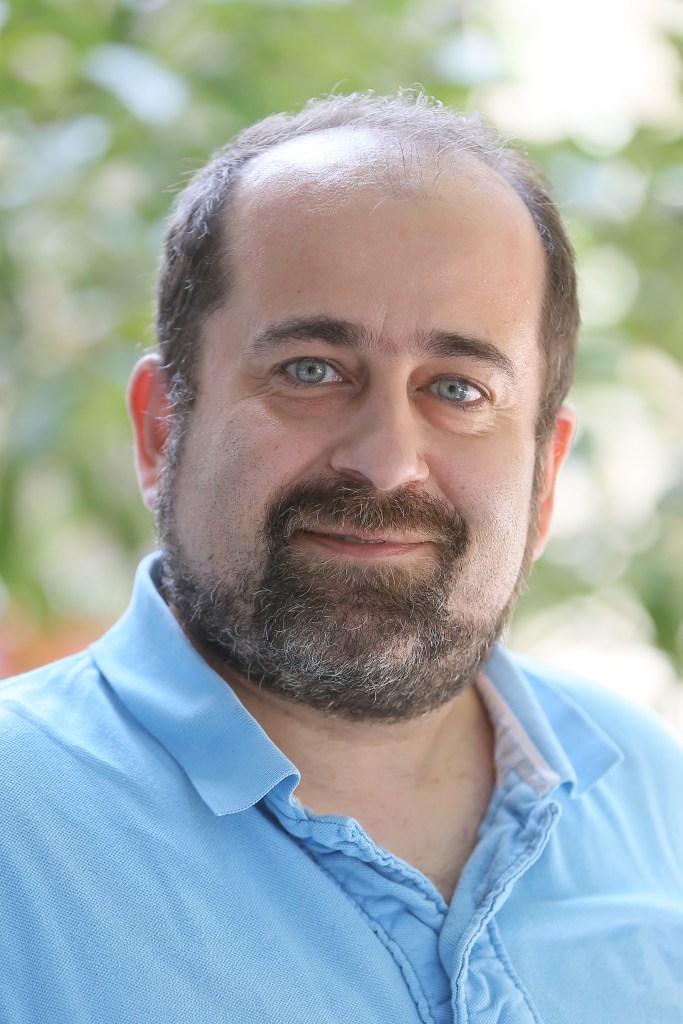

Over the last three years, I have been working with colleagues across Europe and in Türkiye on the Research Literacy of Teachers (ReaLiTea) project, and we are now at the stage where we are getting ready to share our finalised resources. In this post, I’d like to showcase some of the work done by my team at the University of Thessaly, and also to invite you to our upcoming dissemination event, which will take place online on 11 December 2026. I am excited about this, and also keen to read your feedback, so let’s take a look!
The digital version of the framework
As you may have read elsewhere in the blog, one of the main outputs of the project is the framework of competences that, collectively, define our conceptualisation of teacher research literacy. This is, we believe, a powerful tool for reflection, but making it comprehensive came with a trade-off in accessibility. Not everybody has the time and energy to consult a 60-page framework.
To help with that, we have developed an online resource that can help teachers explore their strengths and map their research literacy profile. You can read more about it here. Before you do, let me just say a few things about how the resource works.
First of all, you need to decide whether you want to make a full assessment (which will need about 60 minutes of your time) or to do a quick profile. When you have chosen that, the online tool will present you with a number of descriptors, and you need to read them and think whether they are true for you, or if you are not quite there yet. Eventually, this will take you to your profile page, where you can see a map of your research literacy and set goals for your future development.

A legal caveat
The tool is maximally compliant with data privacy laws, such as the GDPR in Europe. This means that it will not store any of the data you provide. Instead, the data will live on your browser. Depending on your settings, these may be deleted when you terminate the session, or some time later (you can always clear your browser if you are using a shared computer). However, if you prefer to save your work for future reference (e.g., to keep track of your progress over time), you can do so by saving a local file or a pdf document, which you can re-upload to the tool.
Find out more
You can explore the resources mentioned above and register for our online meeting by clicking on the buttons below.
Developing reading skills:
A self-study course
I wanted to say a few words about our reading skills course, which is the second major contribution of Team Thessaly to the project. This is a series of five modules that aim to help language teachers think about what kinds of reading can inform their professional work, develop their skills in accessing this body of knowledge, and think critically and creatively about what they read.
The five modules
- Drawing on published professional knowledge
- Locating relevant knowledge to inform language education
- Engaging with journal articles (and beyond)
- Critical reading and evaluation
- Alternative ways of reading research in language education
These modules live on our ReaLiTea website in their canonical, printable form. At the time, we felt that it was important to prioritise versions of the learning materials that would be easier to access in low-resource situations. However, as good teamwork meant that we were able to complete the resources efficiently, we used our extra time to experiment with a digital version of the resources, which I also think will be quite useful.
Some of the things that I am happy we were able to implement include gated prompts and reveals, which allow teachers to write responses and then compare them with example answers (although in most cases we trust teachers to understand that these are one of many possible ways to respond) and self-marking activities and interactive quizzes. From a technical perspective, I am also quite pleased about the feel of this digital resource, as each module has its own colour family, but remains visually consistent with the others, and about how everything is scalable and works well even at 390px.

The same data-privacy safeguards that I described above apply here as well. No data is transmitted when you engage with a learning activity, and everything is temporarily stored in your browser. Saving your work manually onto a portable file is the only way to retain data. However, you also get the option of creating a .pdf with your name, which you could turn in to your instructor if you are completing these activities as part of assessed coursework.
An interview tracking tool
The third resource I wanted to share is not actually a ReaLiTea output, but I would like to present it here as it grew out of ReaLiTea, and it may be useful to readers who are interested in research literacy.
Essentially, this is a digital checklist that helps teachers prepare for research interviews. One of the ways it does this is through checklists with reminders to do things like charge their recording devices, save their files in two locations, anonymise the transcript and so on. The other thing it does is to present teachers with reflection questions with which they can engage before the interview (e.g., What do I hope to learn from this person? Which question am I most nervous about asking?) and after it (e.g., Roughly how much of the talking did I do? Where did the participant offer something I didn’t follow up?).
These are the things that I would talk about with the teacher-researchers I supervise, as they develop their interviewing skills. However, a digital version may be more useful both because it’s always available and because it’s non-threatening. Another thing that’s useful about it is that when the interview and its processing are over, teacher-researchers can print it out, have it signed if that’s an institutional requirement, and keep it for their ethics review board documentation.
Our online meeting
If you’d like to find out more about all the good work that we’ve been doing at the ReaLiTea project, including the resources that our partners in Norway, Austria, Germany, Türkiye, and the UK have been putting together, you are welcome to join us in our upcoming end-of-project meeting.
We will meet through Zoom (link TBC) on 11th December 2026 at 14:00 CET, and I would be delighted to see you there. You can register by emailing the Vienna team (see amadea [.] brenner [at] univie.ac.at).

As we make our way
to the end…
Three years is a long time to spend on a project, and I am proud of what the team has built. The framework, the self-study modules and the interview helper are all meant to be used, adapted and criticised, so please do try them out. If something works well for you, or doesn’t, I would be glad to hear about it in the comments below or by email. Your feedback will help us improve these resources and shape what comes after the project ends.
And I hope to see you on 11 December!
By subscribing to this blog, you will receive occasional updates on topics relating to language education, including my ongoing work on AI in language teaching and learning and on the research literacy of language teachers. (privacy policy)
Related posts

Teachers who research, researchers who teach: A new issue of Kontexte
A new issue of Kontexte looks at research-based learning in the education of teachers of German.


Wrapping up the ReaLiTea project
The Research Literacy of Teachers (ReaLiTea) project ends in December 2026. Here’s a sneak peak of the materials we’ve been producing. Feel free to look around, and let us know how we can make them more useful and relevant to your needs.

Inclusion beyond translation: A conversation with Maria Cioé-Peña
What can a teacher do when thirty children bring different languages, cultures, and needs into the same classroom? Drawing on a ReaLiTea podcast, this post considers culturally sustaining pedagogy, multilingual ecologies, multimodal meaning-making, and the unresolved gap between inclusive principles and classroom practice.

About me
Achilleas Kostoulas is an applied linguist and language teacher educator at the Department of Primary Education, University of Thessaly, Greece. He holds a PhD and an MA in Teaching English to Speakers of Other Languages from the University of Manchester, UK and a BA in English Studies from the National and Kapodistrian University of Athens, Greece.
His research explores a wide range of issues connected with language (teacher) education, including language contact and plurilingualism, linguistic identities and ideologies, language policy and didactics, often using a Complex Dynamic Systems Theory perspective to tease out connections between them. His published work includes the research monograph The Intentional Dynamics of TESOL (2021, De Gruyter; with Juup Stelma) and the edited volume Doctoral Study and Getting Published (2025, Emerald; with Richard Fay), among numerous other publications.
Achilleas currently contributes to several projects that bring together his long-standing interests in language education, teacher development, and the social dimensions of language learning. As the coordinator of the AI Lang (Artificial Intelligence in Language Education) expert team at the European Centre for Modern Languages of the Council of Europe, he is active in developing principles and resources to help educators make informed, pedagogically grounded use of AI in their teaching. He also leads the University of Thessaly team of ReaLiTea (Research Literacy of Teachers), a project that supports language teachers to engage with, and contribute to, educational research. Alongside these, he contributes to LocalLing (Revitalisation of Linguistic Diversity and Cultural Heritage), a Horizon-funded initiative for the preservation of heritage and minority languages globally.
In addition to the above, Achilleas is the (co)editor-in-chief of the European Journal of Education and Language Review, and welcomes contributions that explore the dynamic intersections between language, education, and society.
About this post
This blog is a space for slow, reflective thinking about applied linguistics, language education, professional development, and the role of technology in language teaching and learning. Transparency about process, tools, and authorship is part of that commitment.
- I wrote this post on 2nd November 2026. I will periodically revise it to ensure accuracy, so feel free to point out any issues that come to your attention.
- When writing this post, I used artificial intelligence to support copy-editing and Search Engine Optimisation. I wrote the text, and retain responsibility for analytical thinking, authorial decisions and wording.
- The views expressed here are personal and do not necessarily reflect those of the University of Thessaly, the European Union (which funded ReaLitea) or any other entity with which I am affiliated.
- The featured image is licensed from Adobe Stock.

Leave a Reply