I’m delighted to share that I’ll be one of the plenary speakers at the 2027 conference of the Centre canadien d’études et de recherche en bilinguisme et aménagement linguistique (CCERBAL) 2027, and I’d love to see many of you there.
The conference
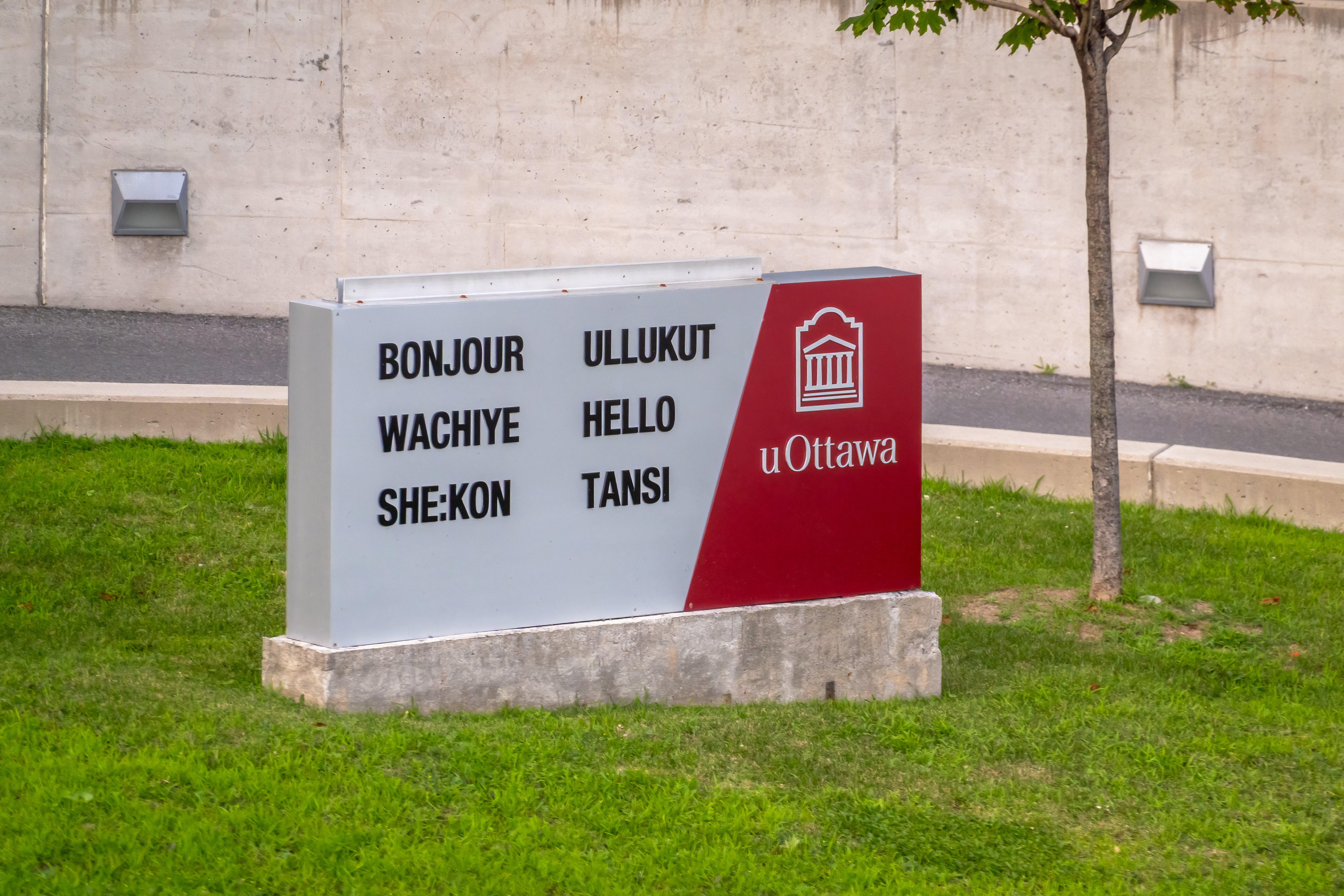
The conference will take place on 6-8 May 2027 at the Official Languages and Bilingualism Institute, University of Ottawa. This year’s edition, entitled Bilingualism and Multilingualism at the Intersections of Art, Science, and Technology, asks what happens to bi- and multilingualism as Artificial Intelligence and other digital technologies become part of everyday language use, teaching and learning.
It pairs that question with the arts and creativity, which keep the human dimension of language in view. A central concern is whether these tools will keep reinforcing the hegemony of English, or whether we might be able to leverage these towards linguistic diversity and social justice. These are questions that concern us deeply at the Artificial Intelligence for Language Education at the European Centre of Modern Languages. I’ll be, therefore, be exploring some of these tensions in my own talk, and I’m looking forward to the conversations that follow.
I’m joined on the plenary stage by Debra Titone (McGill University) and Sara Schroeter (University of Regina). Chairing the conference are Valia Spiliotopoulos (University of Ottawa) and Wei Cai (University of Calgary).
The call for proposals
The call for conference papers is deliberately broad: The organisers welcome research and practice on language use, learning, teaching and assessment, in schools and universities as well as in workplaces, homes, communities and online.
Topics
A non-exhaustive list of topics includes:
- Language, technology, artificial intelligence (AI), fully on-line and hybrid/blended language learning
- Languages of schooling, immersion studies, bilingual and multilingual education, language intensive programs
- Language and the arts
- Bilingualism, multilingualism and the sciences
- Indigenous language education and language revitalization, Indigeneity and language teacher education, Indigenized curriculum development and delivery
- Official languages, heritage languages, modern languages, Indigenous languages, minority languages, languages other than English (LOTE)
- Language, immigration, internationalization, and mobility; language and intercultural education
- Language policy and family language policy
- Community-based, experiential and informal language learning
- Linguistic security/insecurity and linguistic risk-taking
- Critical language studies; language and inclusion, social justice, and equity
- Academic literacies, biliteracy, multiliteracies, and multimodality
- Plurilingualism, multilingualism, cross-linguistic transfer translanguaging
- Language assessment, Canadian Language Benchmarks/CEFR and its companion volume
- Psychology of language learning, emotions, positive psychology
- Nurturing the next generation of language researchers and teachers
Formats
Participation in the conference can take the form of oral presentations, posters, roundtables, thematic symposia and workshops. Although the conference is primarily in person, there will be dedicated block for online presentations. Plenaries and symposia will also be accessible online.
Key dates
| Milestone | Dates |
|---|---|
| Submissions open | 5 October 2026 |
| Submissions close | 30 November 2026 |
| Notification of acceptance | early 2027 |
How do submit
To submit an abstract, please read the instructions that you will find in the conference website, and send your abstract to https://ccerbal2027.sciencescall.org/
If you have any questions, you can submit them directly to the conference organisers at ccerbal@uOttawa.ca
I’d encourage you to submit, especially if your work sits between disciplines, or between research and practice. I hope to see you in Ottawa.
By subscribing to this blog, you will receive occasional updates on topics relating to language education, including my ongoing work on AI in language teaching and learning and on the research literacy of language teachers. (privacy policy)

Critical Applied Linguistics, Language, and Power in Education: Call for Papers
The European Journal of Education and Language Review [EJELR], which I co-edit, invites papers that critically engage with language education and its informing disciplines.


AI in Language Education (Call for papers)
Information about an upcoming Special issue that will focus on how Artificial Intelligence is transforming language education.

CLELE Journal: New issue and volunteering opportunity
This post introduces the May 2025 issue of CLELE Journal, with articles on critical literacy, cultural representation, and inclusive pedagogy through literature. It also features a call for volunteer copyeditors and submission info for prospective authors, ideal for educators, researchers and anyone interested in children’s literature and language education.

About me
Achilleas Kostoulas is an applied linguist and language teacher educator at the Department of Primary Education, University of Thessaly, Greece. He holds a PhD and an MA in Teaching English to Speakers of Other Languages from the University of Manchester, UK and a BA in English Studies from the National and Kapodistrian University of Athens, Greece.
His research explores a wide range of issues connected with language (teacher) education, including language contact and plurilingualism, linguistic identities and ideologies, language policy and didactics, often using a Complex Dynamic Systems Theory perspective to tease out connections between them. Some of his work includes the research monograph The Intentional Dynamics of TESOL (2021, De Gruyter; with Juup Stelma) and the edited volume Doctoral Study and Getting Published (2025, Emerald; with Richard Fay), as well as numerous other publications.
Achilleas currently contributes to several projects that bring together his long-standing interests in language education, teacher development, and the social dimensions of language learning. As the coordinator of the AI Lang (Artificial Intelligence in Language Education) expert team at the European Centre for Modern Languages of the Council of Europe, he is active in developing principles and resources to help educators make informed, pedagogically grounded use of AI in their teaching. He also leads the University of Thessaly team of ReaLiTea (Research Literacy of Teachers), a project that supports language teachers to engage with, and contribute to, educational research. Alongside these, he contributes to LocalLing (Revitalisation of Linguistic Diversity and Cultural Heritage), a Horizon-funded initiative for the preservation of heritage and minority languages globally.
In addition to the above, Achilleas is the (co)editor-in-chief of the European Journal of Education and Language Review, and welcomes contributions that explore the dynamic intersections between language, education, and society.
About this post
This blog is a space for slow, reflective thinking about applied linguistics, language education, professional development, and the role of technology in language teaching and learning. Transparency about process, tools, and authorship is part of that commitment.
- I wrote this post on 10th October 2025. I will periodically revise it to with updates about the conference and to ensure accuracy, so feel free to point out any issues that come to your attention.
- When writing this post, I used artificial intelligence to support copy-editing and Search Engine Optimisation. I wrote the text, and retain responsibility for analytical thinking, authorial decisions and wording.
- The views expressed here are personal and do not necessarily reflect those of the University of Thessaly, CCEBRAL, or any other entity with which I am affiliated.
- The featured image is by oasisamuel – stock.adobe.com.

Leave a Reply