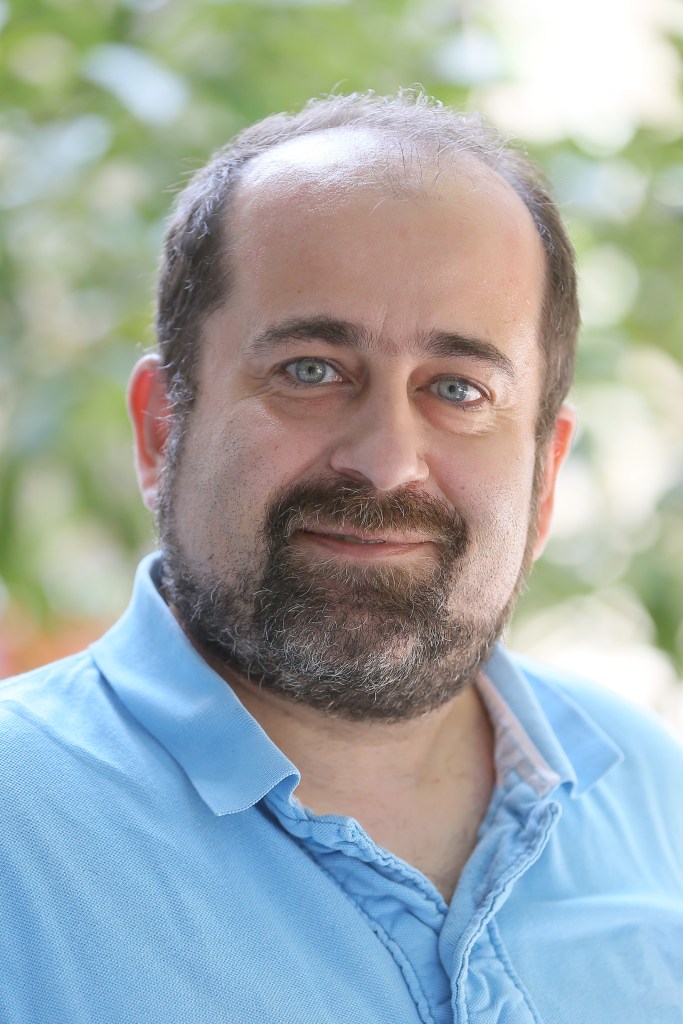
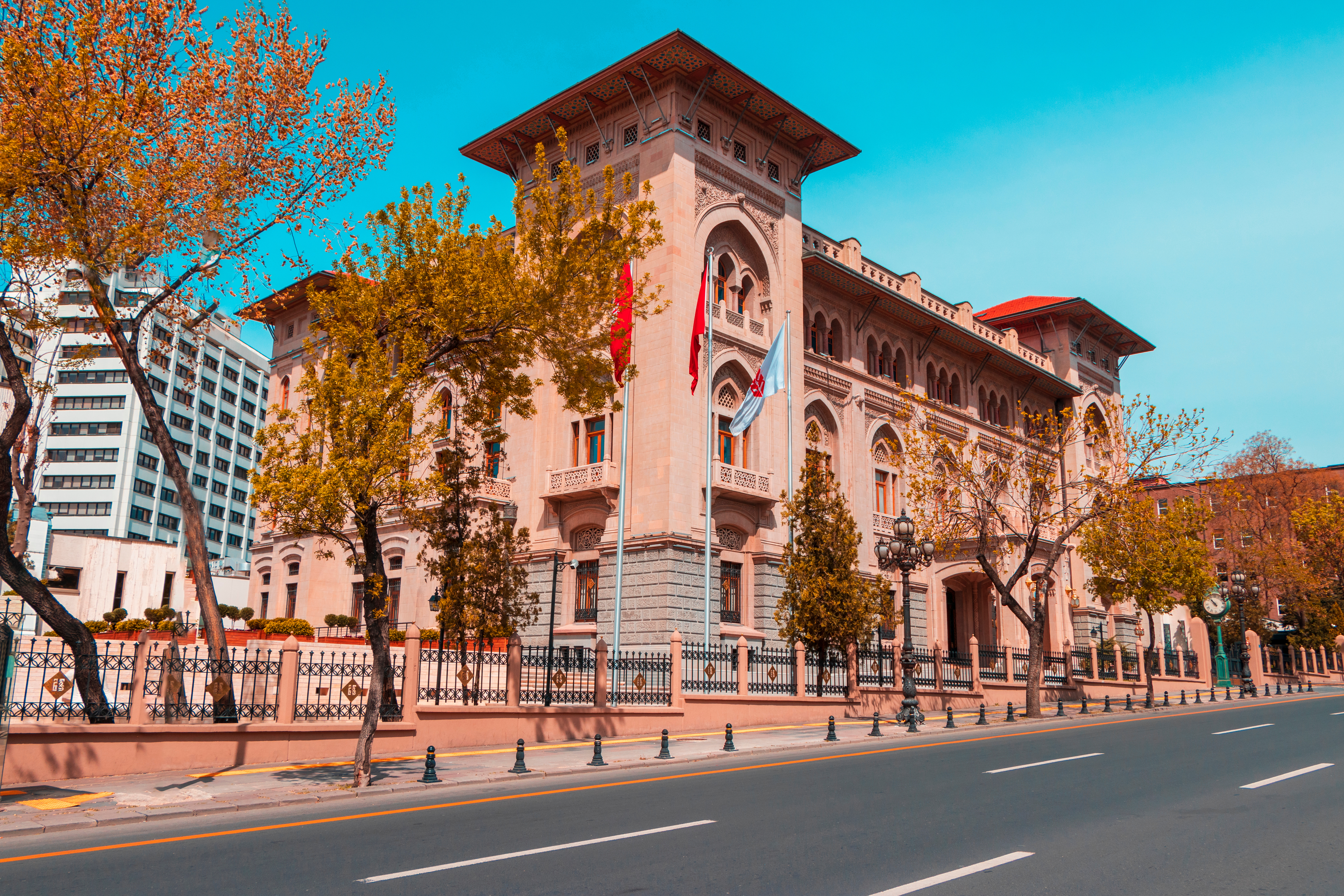
A few days ago, I was in Ankara for one of the regular meetings of the Research Literacy of Teachers project, which took place on the 7th and 8th April 2025. The meeting, which was magnificently organised and generously hosted by our colleague, Aysel Seriaçoğlu, was an opportunity to discuss all the good work that has been taking place in the project, and I would like to share some of it here.
The Research Literacy Framework
One of the main deliverables of this project is a framework of competences that we associate with being a research literate teacher.
In the framework, we suggest that teacher research literacy consists of several components. While mindful of the somewhat arbitrary nature of such distinctions, we distinguish between five such facets of research literacy:
- Key foundational elements, which include language skills, background knowledge, understanding of cultural contexts, knowledge practices, and the ability to learn independently.
- The skill to effectively draw on literature (or other knowledge sources) by finding appropriate sources, evaluating information critically, and combining it in meaningful ways.
- The ability to develop theories for teaching practice, or in other words, thinking about language education in ways that are aware of and sensitive to context, and knowing how to apply these ideas.
- The capacity to produce knowledge through research and the use of suitable methods for gathering and analyzing information while following ethical guidelines.
- The ability to communicate knowledge clearly and appropriately to different audiences, including peers, younger colleagues, and the general public.

Levels and Descriptors
For each of these levels, we have defined different levels of literacy, ranging from non-autonomous to fully autonomous use. To help teachers identify which level is closest to their profile, we have created specific descriptors a specific descriptors. For example, the ability to talk about something one has tried out in their classroom is part of what we have defined as “communicating knowledge”. The table below shows the descriptors for each level of this ability.
| Non-autonomous | Emerging autonomy | Achieved autonomy | |
|---|---|---|---|
| Presentations | I can deliver a prepared talk about my research engagement, in which I summarise the main information that I read or the main findings of my study. I can use language that is appropriate to the audience. I can enhance my presentation with simple visual support such as a poster or slides. | I can deliver a prepared talk about my research engagement, in which I present the information that I read or the main findings of my study. I can use language that balances credibility and audience engagement. I can enhance my presentation with sophisticated visual support. | I can talk about my research with little preparation. I can relate the information I am presenting to the specific needs of the audience I am addressing. I present my work in a unique, personal voice. |
| Asking questions and providing feedback | I can ask for clarifications about points in a presentation that are not clear to me. | I can comment on the strengths of research that has been presented and offer additional perspectives that might not have been considered. | I can offer constructive feedback in response to research that has been presented. I can point out limitations or even major flaws in tactful ways. |
| Responding to questions | I can provide direct answers to most straightforward questions that are posed after a conference presentation. | I can elaborate on my work in response to questions that are posed after a conference presentation. | I can respond in constructive and respectful ways to all the feedback I receive after a conference presentation. |
Using the framework
We hope that the framework can help teachers and teacher educators to make systematic assessments of their research literacy strengths and potential for growth. I am pleased to say that the framework is more or less ready (you can never do enough proofreading!) and I am confident it will be on our website soon.
Learning materials for developing teacher research literacy
We have also been making good progress with creating learning materials that can help teachers develop their research literacy. We are currently working on two types of materials, for instructed learning and self-study.
Just to provide you with an overview, here’s a table of contents for the self-study package, in which I am more directly involved.
| Module | Module name |
| 1 | Drawing on published professional knowledge |
| 2 | Locating and accessing published professional knowledge |
| 3 | Critical reading and evaluation of published professional knowledge |
| 4 | Synthesizing information to generate professional knowledge |
| 5 | Applying professional knowledge to practice |
All the units in the package aim to help language teachers engage effectively with published professional knowledge. We use the term ‘published professional knowledge’ in an inclusive sense to mean any form of documentation that disseminates professionally relevant knowledge, such as academic articles, books, blog entries, podcasts and videos, and the like.


Understanding written communication in language education studies
Another aspect of the project that has been making good progress was the ongoing study of research outputs, such as abstracts, articles, presentations etc. In the past months, we have put together corpora of such documents, and used them to study their linguistic features.
This analysis has now began to yield results, and we are beginning to develop a clearer idea of how ideas are articulated in the discourse of language education. Here’s an example of an n-gram showing some common lexical patterns that we have identified.
| Type | Rank | Freq | Variants |
|---|---|---|---|
| studies on the + of | 1 | 6 | influence, learning, effectiveness, topic |
| of + between two groups | 5 | 4 | difference, scores |
| a + search of published | 24 | 3 | comprehensive, thorough |
| the + between metacognitive awareness | 24 | 3 | relationship, link |
| the + between vocabulary knowledge | 24 | 3 | relationship, correlations |
| to + the overall effect | 24 | 3 | calculate, determine |
| Following a + search of | 24 | 3 | comprehensive, thorough |
| that fit + selection criteria | 24 | 3 | the, their |
We expect such findings can help us to better support teachers who find such texts challenging. One way to use this output would be for creating resources such as phrasebanks. We also use them in learning materials that help teachers better understand the structure of papers.
Our Teacher Research Literacy community of practice
One of the core tenets of the ReaLiTea project is that knowledge building is a collaborative activity. This is why one of our core objectives is to create a sustainable virtual community of practice, where language teachers can share information about events, exchange ideas about research they have read or done, and collaborate in a variety of ways.

We have already created an online collaboration space, which we are beta-testing, and you are very welcome to join!
Developments in OASIS
We also got some exciting news from our project partners in the OASIS project. OASIS, who curate a very comprehensive collection of Open Access summaries of research in applied linguistics and language education, have recently migrated to a new online platform that allows authors to upload summaries of their own work.
Their collection of multilingual summaries is also growing. They now have more than 10 languages other than English, demonstrating a commitment to an equitable representation of all languages in the knowledge ecosystem.


Moving forward
Leaving the Ankara meeting, I felt quite optimistic and confident in that Research Literacy of Teachers project has moved beyond abstract ideas and concepts to concrete, share‑ready results: a near‑final framework, draft learning modules, emerging linguistic insights, and a budding online community. Taken together, these strands weave a powerful support system for teachers who want to read, conduct, and communicate research with confidence.
But the most exciting part is still ahead. In the coming months you’ll see the polished framework published on our website, self‑study materials rolling out module by module, and data‑driven resources—phrasebanks, genre guides, and more—shaped by our corpus analyses. The beta community space will open its doors wider, giving every teacher a place to test ideas, swap feedback, and celebrate wins. And thanks to OASIS’s multilingual push, the knowledge we create and curate will reach classrooms in more languages than ever before.
So let’s keep the momentum alive. I would like to invite you all to visit our website, engage with the materials that you will find there, perhaps share your thoughts in the comments below or by contacting me directly. Each time you explore a module, pose a question in the community, or share a new classroom insight, you’re helping build a richer, more connected professional landscape—one where evidence and experience meet to spark better learning for our students. The groundwork is laid, the tools are on the way, and together we’re poised to turn research literacy from an aspiration into everyday practice. Onward!
Find out more
You can read more about the Research Literacy of Teachers by visiting our website. If you have any thoughts you’d like to share, feel very free to get in touch!

About me
Achilleas Kostoulas is an applied linguist and language teacher educator at the University of Thessaly, in Greece. He has authored and edited several books and articles on diverse topics of language education and the education of language teachers (see here for a full list). Some of his work on teacher research literacy includes the recently published Doctoral Study and Getting Published (2025, with Richard Fay) and the upcoming Empowering Language Teachers (Routledge; with Kenan Dikilitas & Christina Ringel)
About this post
This post was published in April 2025. The content of this post is personal and does not reflect the views of the ReaLiTea team, its individual members, or the views of the University of Thessaly. The ReaLiTea project is co-funded by the European Union, but authors are solely responsible for the content of outputs. The feature image was created by EFKAN @ Adobe Stock and is used with license. Credit for the photo coverage of the event to the ASBU media team and Aysel Seriaçoğlu. Other images are my own work.

Leave a Reply