
Proclaimed by UNESCO in 1999 and observed every February 21st since 2000, the 21st February is International Mother Language Day. In a calendar marked with dozens of remembrance days, including several for languages, this may sound unremarkable. Still, I would argue that, of all the things worth pausing to think about, language may be the most fundamental. It is the medium through which we first understand love, through which we learn to ask for things, and through which we question reality and articulate better alternatives. As humans, we narrate ourselves into existence,1 and language gives us the voice through which we construct the inner narrative around which our self is structured. To have a language is not merely to have a set of words. It is to have a way of being in the world.
Unlike many days that celebrate languages,2 International Mother Language Day is often framed around themes of endangerment, mourning and loss. I prefer to view it as a prompt for celebration: the day when we pause to think about the staggering diversity of human expression, of the resilience of communities who fight to keep their languages alive, and of the richness that comes when many languages coexist rather than one swallowing all the rest. This year, as every year, it invites us to ask some uncomfortable and genuinely fascinating questions about what a language actually is, what it means to call one our own, and what kinds of worlds we want to build around them.


What Even Is a “Mother Language”?
Let’s start with the name itself, because it turns out to be more complicated than it sounds.
Rethinking the term ‘mother’ language
The term “mother tongue” (or “mother language”) has been used for centuries to describe the first language a person learns, the one absorbed in infancy from the people who raised them. It makes sense — or at least it used to make sense for a great part of human history: you were born somewhere, raised by people who spoke a particular language, and that was your language. Except it was never quite that simple, and in our contemporary world it is even less so.
I encourage my students to use the term “first language” (L1), because “mother language” carries two assumptions I find problematic. The first one is that every family has a female parent, and the second one is that this parent –the mother– is primarily responsible for child care, and by extension language transmission. These assumptions, I think, reinforce a very specific, non-inclusive representation of family structure and gender roles. If our terminology exclusively associates language acquisition with the mother, what does that say about fathers, grandparents, same-sex couples, or the many other configurations of family life that exist across cultures and centuries?
Defining the first language(s)
However, the term “first language” itself also seems to require some careful unpacking. A first language is typically a language that fulfills most of the following criteria:
- heritage: it belongs to one or both parents;
- early acquisition: it was present in early childhood;
- proficiency: it is the language the person knows best and uses most; and
- identity: it is the language with which they identify.
And while this sounds reasonably straightforward, these criteria don’t always align neatly. For example, someone might have learned a language first chronologically, only to lose contact with it in childhood, if they moved to a different country or countries, or lost family members. Others might find that the language they speak most fluently is not the one they identify with most deeply. The affective dimension also matters: a third-generation Greek American might speak English better than their Greek, but they might nevertheless feel the latter language is more authentically theirs. This is not just a theoretical puzzle. It shapes how millions of people experience their own identity.
The Language/Dialect Problem
After unpacking the first term (“mother”), we also need to grapple with an equally thorny question: what is a language and how does it differ from other ways we use to describe how people talk (such as ‘dialect’)?
The intuitive answer is that a language is something ‘bigger’ and ‘more prestigious’ than a dialect. Dialects, the reasoning goes, are regional variations, impure or simplified forms of some pure original. But, as often happens in linguistics, folk intuition is entirely wrong. Linguistically speaking, there is no objective criterion that separates a “language” from a “dialect.” The most famously pithy formulation of this point came from the sociolinguist Max Weinreich, who observed that “a language is a dialect with an army and a navy.” What he meant is that the difference is political, not linguistic.
The difference between a language and a dialect is political
Blurring the lines between dialects and languages: Some examples
One fairly uncontroversial example of the point I am trying to make is the Scandinavian language continuum. Most Swedish speakers and Norwegian speakers can generally understand each other without (much) difficulty. Similarly, Danish speakers can generally follow written Norwegian (Bokmål) quite well. Norwegian, Swedish, and Danish are, by the criterion of mutual intelligibility, i.e., the ability to understand each other’s speech, arguably varieties of the same language. Yet we call them three different languages, because they have three different countries, three different standard written forms, and three different national identities attached to them.
Now consider Mandarin and Cantonese. We think of both as “Chinese,” yet their speakers cannot understand each other in spoken form. By the mutual intelligibility criterion, they are different languages. On the other hand, they share a written system, and also Chinese national identity invests powerfully in the idea of linguistic unity, so we view these as being part of the same language.
The role of politics in defining language
The same dynamic plays out in politically fraught contexts everywhere. Serbian and Croatian, for instance are linguistically, mutually intelligible Slavic varieties.3 When I was at school, our geography textbooks listed ‘serbocroatian’ as the official language of Yugoslavia, the country that occupies the space from Slovenia to North Macedonia. Whether these two ways of communication are “the same language” or “different languages” is a matter of some debate, not among linguists examining their phonology, vocabulary or grammar, but among politicians negotiating identity.
And then we have the question of the language spoken in North Macedonia: Many Greek and Bulgarian linguists would readily question its status as a distinct Slavic language (they claim that it’s a Bulgarian dialect). This is of course a political stance, largely dictated by prevailing national policies.4
In Greek linguistics, in particular, there is an additional layer of complexity. Standard descriptions of Modern Greek distinguish between ‘dialect’ and what they call an ‘idioma‘ [a word that roughly translates into ‘sub-variety’, not unlike how ‘idiom’ appears in music]. The term ‘dialect’ denotes those forms of Greek that are completely unintelligible to people who only understand the standard (e.g., Pontic Greek, the variety spoken in parts of southern Italy). On the other hand, Greek varieties that developed within Greek territory are not ‘dialects’, presumably out of fear that this would be a threat to national unity.5
Language varieties
What this reveals is that the lines between “language” and “dialect” are drawn by power. They are dictated by history, ideology, military conquest, state formation, and the decisions of whoever gets to write the textbooks and run the schools. The linguistic fact, i.e., the actual sounds and structures and vocabulary people use, is downstream of these political decisions, not the other way around.
Modern linguistics works around this problem by using a more neutral term: variety. Every community (and people might belong to multiple communities) speaks a variety shaped by geography, social class, profession, age, context. Linguistics is normatively agnostic with respect to structural and aesthetic superiority, which is a sophisticated way to say that it makes no evaluative judgment.6 From a linguistic perspective, no variety is inherently superior to any other. Standard languages are not the “correct” or “pure” form of a language. They are simply the variety that gained institutional backing, usually the dialect of whoever held political and economic power.
The Myth of the Monolingual Society
A third assumption worth dismantling is the idea that societies are, naturally or ideally, monolingual.
Creating monolingual nation states
Pick almost any country and look at its history. You will find that what we now think of as a unified linguistic territory was, for most of its past, a patchwork of mutually unintelligible varieties, with different communities speaking different languages across valleys, coastlines, and mountain passes. National languages, such as French, Italian, German or Greek, were actively constructed through centuries of education, bureaucracy, military service, and deliberate cultural policy.7 The “mother tongue” of a peasant in Crete in the 1890s was likely a regional variety so different from the Peloponese-based standard Modern Greek that he would have struggled to communicate in Athens.
The enforcement of a single national language has been one of the great projects of modern statehood —and one of its great violences. Languages don’t just quietly step aside when a more powerful one arrives. They retreat, fragment, go underground, survive in kitchens and churches and grandmothers’ voices, and then sometimes, after a generation or two, vanish. When they vanish, they take with them entire ways of conceptualizing the world: vocabularies for local plants, animals, landscapes; ways of structuring time, obligation, kinship; forms of humor and grief that don’t translate.
Are monolingual states truly monolingual?
And yet, even officially monolingual societies are rarely actually monolingual. Greece, for instance, presents itself as linguistically unified around Standard Modern Greek. But look more closely: Pomak communities in the northeast; Romani speakers across the country; Arvanites who maintain a form of Albanian; Vlach-speaking communities with roots in the mountains; the linguistic legacies of Asia Minor Greek, Pontic Greek, and the Jews of Thessaloniki who spoke Ladino. Uncomofrtable though it might be to some people, the “monolingual” society is almost always a political construction imposed on a more complex reality.
The “monolingual” society is almost always a political construction
imposed on a more complex reality.
The myth that monolingualism is the natural state of human societies, and its corollary, that diversity is a problem to be managed, has done incalculable damage. Throughout history, it has been used to justify the suppression of indigenous languages, the forced assimilation of minority communities, and the systematic devaluing of anyone whose “mother tongue” is not the language of the state.
The languages we speak
The International Mother Language Day focuses our attention on the language of origin, home and earliest memory. But the vast majority of people alive today are not monolingual. They navigate two, three, or more languages across the course of their daily lives. To understand this reality, we need precise vocabulary.
Second, foreign, and the space between
When someone learns a language after early childhood (perhaps in school, through immigration, or through work), we call this a “second language” (L2), regardless of how many languages came before it. The term, to clarify, is not sequential; it is categorical. Your second language is any language that is not your first. Whether it is (in a more literal sense) the second you learned or the fifth one is not important.
But within this category, there is a crucial distinction worth understanding: the difference between a second language and a foreign language. The distinction turns on social context rather than the learner’s experience. A second language, in the technical sense, is the dominant language of the community in which the learner lives, i.e., the language they need to participate in public life, navigate institutions, make friends, find work. Modern Greek as taught to recently arrived refugees in a Priority Education Zone is a second language in this sense. French as taught to children in Greek schools (FLE, which is short for Français langue etrangère), where French has no significant social presence outside the classroom, is technically a foreign language, taught with an eye to hypothetical future use rather than immediate communicative necessity.
This distinction matters enormously for pedagogy, for policy, and for what we ask of learners. A child learning the language of the country they have just fled to is in a completely different situation —practically, emotionally, cognitively— from a child learning French or Japanese as a school subject. Conflating the two leads to confused teaching approaches and, often, to a failure to recognize what immigrant and refugee children actually are asked to do in classrooms.
What Does It Mean to Be Bilingual?
For much of the twentieth century, the dominant view of bilingualism was restrictive to the point of being almost comical in hindsight. A “true” bilingual, on this view, was someone who commanded two languages with equal and native-level proficiency: perfectly fluent, perfectly grammatical, perfectly at home in both. By this standard, almost no one was bilingual.
Contemporary linguistics has decisively moved on from this fantasy. The newer understanding is both more realistic and more interesting: like many other constructs, bilingualism (or, better, plurilingualism) is not a binary status but a continuum. You are bilingual if you regularly use two languages with sufficient proficiency, that is to say, if you can manage to do what you need to get done. It matters less if your proficiency in one language is less polished than in the other(s).
From languages to language repertoires
More importantly, the concept of a linguistic repertoire has shifted how we think about the whole question. Your linguistic repertoire is the totality of everything you can do linguistically: every language, every dialect, every register, every code-switching maneuver, every technical vocabulary, every way of speaking you have ever developed. It doesn’t distinguish between “languages” and “dialects” as separate buckets. It treats all of them as resources you draw on differently in different contexts.
This framing captures something that the old bilingual/monolingual binary completely missed: the fact that most people’s multilingual identity is fluid, dynamic, and context-dependent. The language that feels most “native” to you may change over your lifetime. People who emigrate in adulthood often find their first language slowly shifting (e.g., vocabulary becoming a little less automatic, certain expressions sounding increasingly strange, a second language gradually taking over the mental space once occupied by the first). People who return to their birth country after years abroad rediscover capacities they thought they’d lost. Children of immigrants often find themselves in a more complex position still: fluent in the majority language, partially fluent in the heritage language, fully at home in neither in some contexts, and uniquely at home in the code-switching space between them.
Language Policy: Who Decides?
At the end of the day, all this (what languages appear in the school curriculum, which get official recognition, which are allowed in courts and hospitals and government offices) is a matter of language policy. And language policy is always political.
Defining language policy
Language policy, in its fullest sense, encompasses three interconnected dimensions. The first is language ideology: the beliefs that circulate in a society about which languages are valuable, prestigious, logical, beautiful, or threatening. We rarely articulate, let alone examine, these beliefs explicitly, and yet they shape everything, from the assumptions teachers make about students who arrive speaking a minority language and the contempt or admiration that greets a foreign accent, to the way a community’s speech appears (or does not appear) in public life.
The second is language management, a term that encompasses the formal decisions (laws, curricula, institutional rules etc.) that shape the linguistic landscape. Which languages get constitutional recognition? What is taught in schools, and at what level? Which language(s) does the government use? These decisions have profound consequences for millions of lives.
The third, and most often overlooked, dimension is language practice: the actual, everyday communicative behavior of people that, over time, shapes what languages survive and thrive. No law can keep a language alive if its speakers stop using it at home. No suppression can fully kill a language if communities are determined to keep it alive.
Different approaches to multilingualism
The world contains a striking variety of approaches to official multilingualism. Some states (like South Africa, with its eleven official languages) have enshrined linguistic diversity in law, recognizing that in a society with such profound demographic plurality, any other approach would be a form of exclusion. The residents of Johannesburg speak an astonishing range of first languages: Zulu, Xhosa, Sotho, Afrikaans, English, and more. And they can navigate this multiplicity every day with remarkable fluency and practicality.
Other states take the opposite tack, investing politically in the fiction of a single national language. The United States offers a recent and pointed example. For almost its entire history, the US had no official language. This is a striking omission for a country so often associated with English, but one that reflected a real, if unspoken, acknowledgment of the country’s multilingual reality. In 2025, an executive order changed this, designating English as the official language for the first time. Whatever one thinks of the policy itself, the timing and the framing make clear that language designation is never simply a technical matter. It is always, also, a statement about who belongs.
The World We’re Actually Living In
Global migration has made the questions raised by International Mother Language Day more urgent than ever. When people move, whether for safety, work, love, or any of the hundred reasons humans have always moved, they bring their languages with them. Children arrive in schools speaking languages the teachers have never heard. Families navigate between a home language, a heritage language, and a new majority language. Communities form in diaspora, maintaining linguistic ties across continents via WhatsApp groups and satellite television and video calls.
The internet, for all its homogenizing tendencies, has also been a force for linguistic diversity. It has enabled speakers of minority languages to find each other, create content, maintain communities, and document their languages in ways that were impossible a generation ago.
All of this presents educational systems with a genuine challenge, and a genuine opportunity. The challenge is obvious: how do you teach effectively in a classroom where children arrive with radically different linguistic backgrounds? The opportunity is sometimes harder to see: those children are not coming to school with a deficit. They are coming with a resource. A child who arrives in a Greek classroom already fluent in Arabic, or Albanian, or Tigrinya, or any other language, has a cognitive and cultural richness that a monolingual classroom can either squander or build upon.
Research is unambiguous on this: children’s first languages are not competitors to the languages they are learning. They are foundations on which all of us (not just the newcomers) build new language learning. Suppressing or ignoring the home language does not help children learn the majority language faster. It impedes learning, damages self-concept, and communicates to the child that who they are and where they come from is not valuable.
A Day Worth Observing
International Mother Language Day began as a commemoration of a specific tragedy: the killings of students in Dhaka in 1952, who were demonstrating for the right to use Bengali as an official language of what was then East Pakistan. The movement they sparked eventually contributed to Bangladesh’s independence. Language rights and political rights are not separate struggles.
Language rights and political rights are not separate struggles
But the day has grown into something broader: an invitation to reflect on the extraordinary diversity of human linguistic expression, and on the political, educational, and interpersonal responsibilities that diversity brings.
There are around 7,000 languages in the world today. By some estimates, half of them may no longer exist within a century, as smaller communities shift to more dominant languages or simply fail to transmit their tongue to the next generation. Each of those languages is not just a communication system. It is a literature, an oral tradition, a philosophy, a particular way of parsing the world. It is somebody’s earliest memory.
This year, on International Mother Language Day, perhaps the most useful thing any of us can do is take seriously the languages of the people around us, not as exotic curiosities, not as administrative inconveniences, but as evidence of human complexity and resilience. A child in the classroom who switches effortlessly between two languages is not confused; they are sophisticated. The grandmother who keeps insisting on telling stories in a language her grandchildren barely understand is not being stubborn; she is keeping something alive.
A language is not just a tool for communication. It is a world. And every world deserves to exist.
By subscribing to this blog, you will receive occasional updates on topics relating to language education, including my ongoing work on AI in language teaching and learning and on the research literacy of language teachers. (privacy policy)

International Mother Language Day 2019
Facts, figures and thoughts regarding linguistic diversity, globally and in Greece.


Raising children to speak many languages
Summary of the article “Family language policy in mixed-language families: An exploratory study of online parental discourses” (Kostoulas & Motsiou 2020).

Launching the Revitalisation of Linguistic Diversity & Cultural Heritage (LocalLing) project
LocalLing is a four-year international project bringing together researchers and educators from four continents to study, teach, and support local and heritage languages in socially just ways.
Questions about (mother) languages and plurilingualism
What is International Mother Language Day?
Proclaimed by UNESCO in 1999 and observed every 21 February, it commemorates the 1952 Bengali Language Movement in Dhaka and promotes linguistic diversity and multilingual education.
What does “mother language” actually mean?
Traditionally, it refers to the first language acquired in childhood. However, the term carries assumptions about gender roles and family structure. Many scholars prefer “first language (L1)” for greater precision and inclusivity.
Is there an objective difference between a language and a dialect?
No. From a linguistic perspective, there is no purely structural criterion separating the two. The distinction is largely political and tied to statehood, standardization, and institutional power.
Are most societies naturally monolingual?
Historically, no. Most societies have been multilingual. Modern monolingual nation-states are the result of deliberate political, educational, and administrative standardization.
Why does protecting linguistic diversity matter?
Languages encode cultural memory, ecological knowledge, identity, and worldview. Their loss is not just communicative but epistemic and cultural.
Summary
- International Mother Language Day is not only about endangered languages; it is an invitation to rethink what we mean by “mother language,” identity, and belonging.
- The distinction between “language” and “dialect” is not linguistic but political; power determines recognition and legitimacy.
- Monolingual nation-states are historical constructions, not natural realities; multilingualism has always been the human norm.
- Bilingualism and plurilingualism are continua, not elite categories requiring equal mastery of multiple languages.
- Language policy—ideology, management, and practice—shapes whose languages are legitimized, taught, or silenced.
Footnotes
- I don’t quite remember where I picked up this phrase, which is why I can’t cite it properly, so anyone can remind me who wrote/said it, I would be very grateful. ↩︎
- Including, most recently the nationalist fest that is the World Day of Greek Language, and don’t get me started on that! ↩︎
- And this was even more so in the past, before Serbians and Croatians began systematic policies of language purism, aimed to cleanse their language from traces of their shared past. ↩︎
- After all, when Greece was competing against Bulgaria for the territories of Macedonia (the broader region that includes northern Greece and our neighbours), Greek linguists would pronounce that the language spoken there was a dialect of Greek, bastardised by contact with Slavic people. ↩︎
- Crude as it sounds, such linguistic ideology deeply permeates the Greek education system. I was recently involved in writing textbooks for the Greek Ministry of Education, and in the context of a unit about language, we invited students to reflect on what a dialect is. We noted, in a footnote, that the term ‘idioma’, which they (and their teachers) might have used, is dated and uncommon outside Greek linguistics. This single parenthetical comment triggered more pushback from the government-appointed reviewers than the unit on reproductive rights and justice. ↩︎
- Which is not to say that it is completely value-neutral: the definition of linguistics to which I subscribe is explicitly committed to norms of anti-racism, equality, and rights. ↩︎
- Or, to use a phrase I like to say in class “με τη βέργα του δασκάλου και τη σφυρίχτρα του χωροφύλακα”: ‘by teachers’ rods and gendarmes whistles’. ↩︎

About me
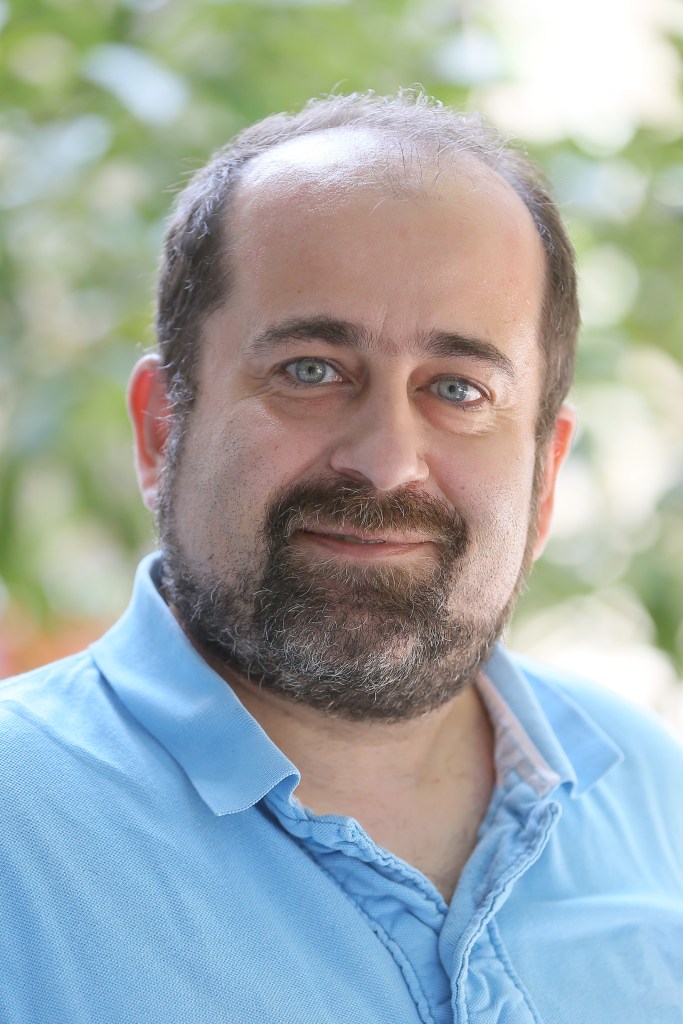
Achilleas Kostoulas is an applied linguist and language teacher educator at the Department of Primary Education, University of Thessaly, Greece. He holds a PhD and an MA in Teaching English to Speakers of Other Languages from the University of Manchester, UK and a BA in English Studies from the National and Kapodistrian University of Athens, Greece.
His research explores a wide range of issues connected with language (teacher) education, including language contact and plurilingualism, linguistic identities and ideologies, language policy and didactics, often using a Complex Dynamic Systems Theory to tease out connections between them. Some of his work in the field includes the research monograph The Intentional Dynamics of TESOL (2021, De Gruyter; with Juup Stelma) and the edited volume Doctoral Study and Getting Published (2025, Emerald; with Richard Fay), as well as numerous other publications.
Achilleas currently contributes to several projects that bring together his long-standing interests in language education, teacher development, and the social dimensions of language learning. As the coordinator of the expert team of AI Lang (Artificial Intelligence in Language Education), an initiative of the European Centre for Modern Languages of the Council of Europe, he works on developing principles and resources to help educators make informed, pedagogically grounded use of AI in their teaching. He also leads the University of Thessaly team of ReaLiTea (Research Literacy of Teachers), a project that supports language teachers in developing the capacity to engage with, and contribute to, educational research. Alongside these, he contributes to LocalLing, a Horizon-funded initiative to preserve and strengthen heritage and minority languages globally.
In addition to the above, Achilleas is the (co)editor-in-chief of the newly established European Journal of Education and Language Review, and welcomes contributions that explore the dynamic intersections between language, education, and society.
About this post
This blog is a space for slow, reflective thinking about applied linguistics language education, professional development, and the role of technology in language teaching and learning. Transparency about process, tools, and authorship is part of that commitment.
- I wrote this post on 21st February. I will periodically revise it to ensure accuracy, so feel free to point out any issues that come to your attention.
- The slides at the top of the post have been translated from Modern Greek to English with assistance from Claude. When writing this post, I used artificial intelligence to support copy-editing and Search Engine Optimisation. I wrote the text, and retain responsibility for analytical thinking, authorial decisions and wording.
- The content of this post is based on a lecture delivered at the University of Thessaly, as part of the Linguistics and the Greek Language course that I teach. The views expressed here are personal and do not necessarily reflect those of the University of Thessaly.
- The featured image is by Belight, who are sharing it with a license from Adobe Stock.

Leave a Reply