The content of this 2013 post is no longer current. The post is retained here as part of the historical archive of this blog.
This list of references [link no longer active] on the use of corpora in discourse analysis/studies may be of use to some.
According to Costas Gabrielatos, who curates the list, it comprises “(a) publications reporting on research using corpora to examine discourses or discourse features/patterns, and (b) publications discussing the compilation of corpora, or the development of corpus techniques/metrics, for corpus-based/assisted discourse analysis/studies”.
A very worthwhile project!

Teachers who research, researchers who teach: A new issue of Kontexte
A new issue of Kontexte looks at research-based learning in the education of teachers of German.


Bilingualism and Multilingualism at the Intersections of Art, Science, and Technology (CCERBAL 2027)
I will be delivering a keynote address at the CCERBAL 2027 conference, this is the call for papers, and I’d love to see you there, in person or virtually.

Wrapping up the ReaLiTea project
The Research Literacy of Teachers (ReaLiTea) project ends in December 2026. Here’s a sneak peak of the materials we’ve been producing. Feel free to look around, and let us know how we can make them more useful and relevant to your needs.

About me
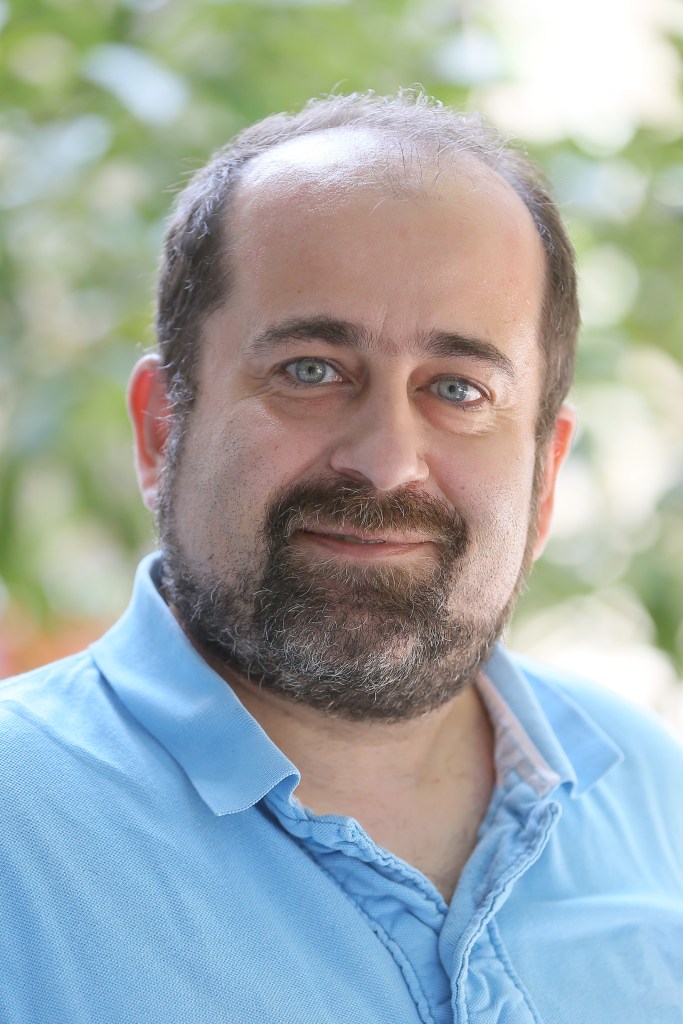
Achilleas Kostoulas is an applied linguist and language teacher educator at the Department of Primary Education, University of Thessaly, Greece. He holds a PhD and an MA in Teaching English to Speakers of Other Languages from the University of Manchester, UK and a BA in English Studies from the National and Kapodistrian University of Athens, Greece.
His research explores a wide range of issues connected with language (teacher) education, including language contact and plurilingualism, linguistic identities and ideologies, language policy and didactics, often using a Complex Dynamic Systems Theory to tease out connections between them. Some of his work in the field includes the research monograph The Intentional Dynamics of TESOL (2021, De Gruyter; with Juup Stelma) and the edited volume Doctoral Study and Getting Published (2025, Emerald; with Richard Fay), as well as numerous other publications.
Achilleas currently contributes to several projects that bring together his long-standing interests in language education, teacher development, and the social dimensions of language learning. As the coordinator of the expert team of AI Lang (Artificial Intelligence in Language Education), an initiative of the European Centre for Modern Languages of the Council of Europe, he works on developing principles and resources to help educators make informed, pedagogically grounded use of AI in their teaching. He also leads the University of Thessaly team of ReaLiTea (Research Literacy of Teachers), a project that supports language teachers in developing the capacity to engage with, and contribute to, educational research. Alongside these, he contributes to LocalLing, a Horizon-funded initiative to preserve and strengthen heritage and minority languages globally.
In addition to the above, Achilleas is the (co)editor-in-chief of the newly established European Journal of Education and Language Review, and welcomes contributions that explore the dynamic intersections between language, education, and society.
About this post
I originally published this post in 2013 to draw attention to a resource that proved very valuable during my studies. The content of the post is no longer current, but I have retained it here for archival purposes. I updated the post on 10th January 2026 to update the aesthetics of the post, remove the broken link, and add disclaimers.
The content of the post does not reflect the views of the University of Thessaly, the people mentioned in the post or any other entity with whom I am affiliated. No content was generated by artificial intelligence.

Leave a Reply