
About this post: This is a post advertising an academic conference on multilingual education that took place in 2016. The content of this post is no longer current, and it is retained here for archival purposes only. If you landed on this page looking for information on multilingualism, the following collections of posts may be helpful:
By subscribing to this blog, you will receive occasional updates on topics relating to language education, including my ongoing work on AI in language teaching and learning and on the research literacy of language teachers. (privacy policy)
Multilingual Language Learning with Digital Media
If you are interested in Computer-Assisted Language Learning (CALL), there’s a conference (link no longer active) in Frankfurt in February 2016, which might be worth attending.
The conference, entitled Multilingual CALL: Multilingual Language Learning with Digital Media in Primary and Secondary Classrooms, will be organised by the Institute of English and American Studies of the Goethe University in Frankfurt, and will take place on February 17th and 18th, 2016.
Some of the topics that will be discussed include:
- CALL tools and materials using multiple languages, including previously learned school languages, heritage & minority languages
- Use of CALL with multilingual learners
- Language choice and code-alternation in CALL
- Multilingual practices in Web 2.0-based and telecollaboration-based CALL
- Multilingual CALL and language awareness
- Practical experiences with multilingual CALL at school
Call for papers
Empirical, conceptual and design-oriented contributions from interested participants are all encouraged. Abstracts (500 words) are to be emailed to mcall[at]em.uni-frankfurt[dot]de by 16th November 2015, and notification of acceptance is expected by 1st December. There will also be publication opportunities after the conference, in the form of an edited volume.
Financial assistance
There are a few travel grants for doctoral students (100€ for Germany-based, 200€ for international participants). Participants interested in applying for such a grant are asked to submit a short letter in support of their claim, along with the abstract.

How to write a peer review
Notes on writing peer reviews that help editors decide and authors act, and honest thoughts on where AI can, and can’t, responsibly help.


Writing a Literature Review: Three Tasks, Not One
A literature review is not one task but three. Here is how I explain the difference to my students, and how to decide what belongs where.

What Russian Speakers Find Hard About Greek (According to Their Teachers)
In a newly published chapter, Eleni Motsiou and I ask experienced teachers what makes Modern Greek difficult for speakers of Russian. Their answers say as much about how teachers know things as about the two languages.

About me
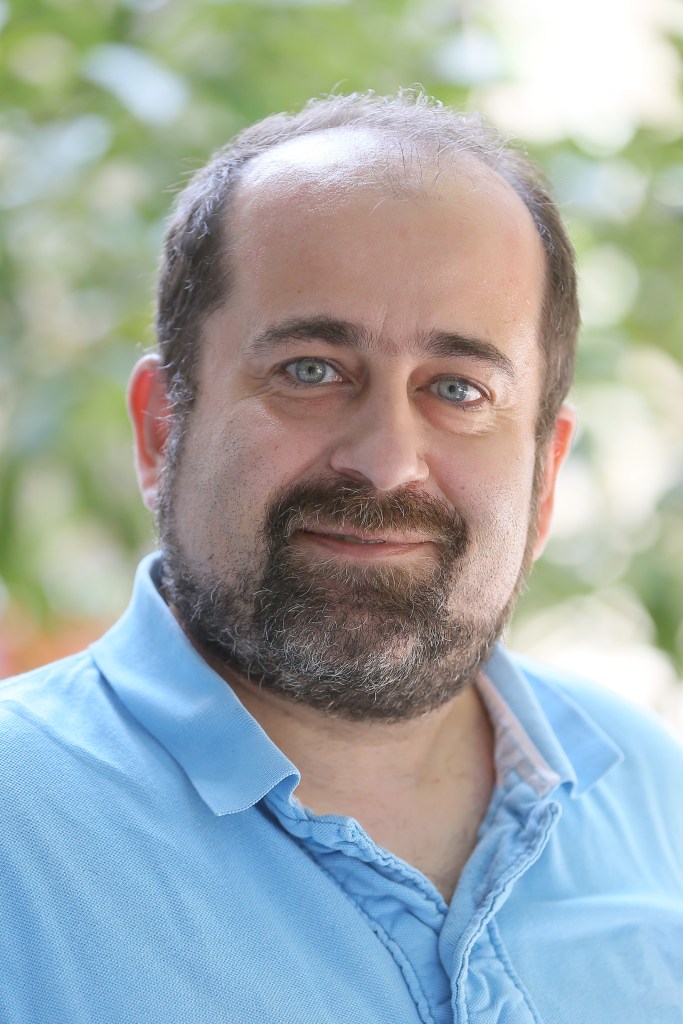
Achilleas Kostoulas is an applied linguist and language teacher educator at the Department of Primary Education, University of Thessaly, Greece. He holds a PhD and an MA in Teaching English to Speakers of Other Languages from the University of Manchester, UK and a BA in English Studies from the National and Kapodistrian University of Athens, Greece.
His research explores a wide range of issues connected with language (teacher) education, including language contact and plurilingualism, linguistic identities and ideologies, language policy and didactics, often using a Complex Dynamic Systems Theory to tease out connections between them. Some of his work in the field includes the research monograph The Intentional Dynamics of TESOL (2021, De Gruyter; with Juup Stelma) and the edited volume Doctoral Study and Getting Published (2025, Emerald; with Richard Fay), as well as numerous other publications.
Achilleas currently contributes to several projects that bring together his long-standing interests in language education, teacher development, and the social dimensions of language learning. As the coordinator of the expert team of AI Lang (Artificial Intelligence in Language Education), an initiative of the European Centre for Modern Languages of the Council of Europe, he works on developing principles and resources to help educators make informed, pedagogically grounded use of AI in their teaching. He also leads the University of Thessaly team of ReaLiTea (Research Literacy of Teachers), a project that supports language teachers in developing the capacity to engage with, and contribute to, educational research. Alongside these, he contributes to LocalLing, a Horizon-funded initiative to preserve and strengthen heritage and minority languages globally.
In addition to the above, Achilleas is the (co)editor-in-chief of the newly established European Journal of Education and Language Review, and welcomes contributions that explore the dynamic intersections between language, education, and society.
About this post
This blog is a space for slow, reflective thinking about applied linguistics language education, professional development, and the role of technology in language teaching and learning. Transparency about process, tools, and authorship is part of that commitment.
- I wrote this post on 27th October 2015, and archived it in 2018. An aesthetic and functional upgrade took place on 11th January 2025.
- The views expressed here are personal and do not necessarily reflect those of the University of Thessaly or any other entity with which I am affiliated.
- The featured image is by eye/see @ Flickr, who are kindly sharing it with a Creative Commons, Attribution, Non-Commercial, Non-Derivative (CC BY-NC-ND) license.
Featured Image:

Leave a Reply