
A lot of my work, especially over the last three years, has focused on developing the research literacy of teachers of second, foreign and additional languages. By teacher research literacy, I mean all those socially situated practices in which teachers interpret and create empirically informed professional knowledge to make sense of their teaching context, improve learning outcomes and build identities within the language education community. I am becoming increasingly conscious that all this is a useful first step, but it is not specific enough, at least in the way I have been approaching it, to address the particular challenges of working with minoritised languages, with languages that are less widely distributed, or with vulnerable learners, such as refugees, members of minorities, or marginalised populations.
What prompted this post was a series of academic events in which I was involved at the Université de Poitiers in mid-November 2026. The first was a workshop with students from the Français Langue Étrangère MA programme at the Faculty of Langues et Lettres on 18th November, where my colleague Eleni Motsiou and I presented the ReaLiTea Framework for the Research Literacy of Language Teachers.1 Then, on 20th November, we took part in a journée d’études in the same Faculty, where we asked whether the framework, and our ReaLiTea work in general, had been written from a position of privilege, and suggested how it might be extended. What follows is a continuation of this line of thinking.
Working with future teachers of French to understand research literacy
It was, perhaps, a happy accident that we started our work in France by discussing our understanding of teacher research literacy with an uncommonly bright and engaged cohort of future teachers of FLE (French as a foreign language). French is, of course, a major international language with a vibrant research tradition in didactique des langues, which only partially overlaps with the anglocentric and Germanic models of teacher education with which I am more familiar. And yet, despite its prominence and history, including a colonial and imperialist history that I will not pretend to ignore, French sits in the shadow of English in many education systems, including Greece’s.
Most of the research on language teaching that circulates internationally, including our ReaLiTea work, appears in English and refers primarily to the teaching of English. A future FLE teacher who engages with research is therefore often reading in one language about teaching another, and has to judge whose knowledge applies to their own classroom.
The participants’ views
The workshop participants, whose ranks included future teachers from Colombia, Poland and Uzbekistan, rose to the challenge admirably. They gave us their own definitions of language teacher research literacy, and zeroed in on the pragmatic and conceptual challenges of reading research in English to teach French to students in, say, Bosnia, while balancing expectations shaped by their own and their students’ prior schooling. The arguments and reservations that one encounters in abstract form in much of the critical applied linguistics literature were their lived reality, and they articulated this with remarkable clarity.

For them, a research-literate teacher is someone who “maintains a reasonable amount of doubt” about established ways of doing things, and about whatever they read. Such teachers “always want to know about how things are done elsewhere” because “good ideas come from everywhere”. Research literacy is important because it “allows [teachers] to redo something that has already been done” in other contexts and to establish, for themselves, what applies and what needs adjustment. And, perhaps aptly for a discussion that took place in the midst of a month-long period of student unrest, becoming autonomous in knowledge building is important because “you can’t expect the people in power to want the best for you or your students”.
Language injustice is not only about access
We couldn’t have asked for a better way to set the scene for the talk that followed at the journée d’études. The argument we made was that language injustice is not just a question of who gets to learn which languages, and who such arrangements leave out. It is also a question of recognition: of which languages a school system promotes, and of which ones receive institutional support. This is a point I have written about often, most recently here.
I often use Greece as an example of this, not because it is particularly egregious, but because it is the context I know best. Greece is, perhaps surprisingly to outsiders, a country with many languages, but its languages are not equally visible. Standard Modern Greek dominates teaching and administration. English is highly visible too, in academic programmes, in internationalisation and in academic communication. German and French have a place in the national curriculum. Then, there are the languages that are present but much less visible: Romani, Aromanian (Vlach), Arvanitic, Pomak, Dopka/Nash and Turkish. Regional varieties of Greek, such as Pontic, Cretan, Tsakonian and Epirote, are growing in visibility, but they remain on the margins and often carry stigma.
I have argued for years, and not without professional consequences, for broader language provision in the education system. But the point I want to make here is not about how many languages a system offers. It is about which languages are considered legitimate and valuable. The question, to phrase it differently, is whether we keep making choices on the basis of historical tradition, prestige and practicality, or whether we start thinking in terms of visibility, inclusion and multilingualism. That shift calls for more intentional language policy, greater visibility for linguistic diversity, and real support for less widely spoken languages.
From rights to practice
Language policy, including the concerns about linguistic rights outlined above, is ultimately enacted through the education system, and this is precisely where the picture becomes uncomfortable. People who teach lesser-used languages often work on what I might call the margins. Their expertise goes unrecognised. Their practice goes undocumented. And, their voices are missing from research and from policy. This, I would argue, is a form of epistemic injustice.2 And it is here that research literacy becomes relevant, because it is one way of helping teachers produce, examine and share knowledge on their own terms.
Before moving on, a quick reminder: in the ReaLiTea project, we conceptualised research literacy as a situated ability with five facets:
- Knowledge foundations: language proficiency, schematic knowledge, knowledge practices and knowledge autonomy.
- Interacting with knowledge: locating, extracting, evaluating and synthesising information.
- Theorising from knowledge: theoretical positioning, contextual sensitivity, reflexive awareness and practicality.
- Producing knowledge: research design, data generation, data analysis and ethics.
- Communicating knowledge: talking and writing about research, communities of practice, outreach and activism.
You can find out about your own research literacy by taking the following self-assessment:
Just to be clear, the argument we make in the ReaLiTea project is not a dismissal of experiential knowledge. Experiential knowledge is valuable,3 but it has limits: it can lock teaching into existing patterns, it is limited to one person’s horizon, and it rarely leaves the classroom. As I will argue below, these limits are especially relevant to teachers of lesser-used languages.
Teaching without a safety net
Research literacy, as we argue in the ReaLiTea project, is a core part of every language teacher’s professional skill set. But it matters even more for people who teach heritage and minority languages,4 and who work with fewer resources and less support. For them, research literacy affects how sustainable their teaching is.
Unlike teachers in the mainstream education system and teachers of languages that have institutional support, many of these teachers are enthusiastic volunteers without formal training as language educators. Among the people with whom I work in refugee and migrant language education, there are pensioners who used to be generalist teachers, priests, and activists, all of whom balance their lack of formal training with enthusiasm and intuition; they do valuable work, but they could do better. They also often have to improvise their own resources, because relevant materials are scarce. But materials development involves constant judgement: it means asking what works, for whom, and why. Research literacy gives teachers tools to make those judgements systematically, and not only on intuition.
There is also a collective dimension to this. One of the most problematic aspects of language education ‘on the margins’ is that good practice often stays with one teacher in one classroom. What research literacy offers is a skill-set that helps teachers document, evaluate and share what they do, so that others can use it. Within a language community (say, teachers of Aragonese in Spain), this could mean that novices do not have to start from scratch. Across language communities, it means that transferable insights can travel, for example from Aragonese in Spain to Amazigh in Morocco and Tunisia.5 And shared, well-evidenced practice gives these teachers a stronger voice in policy and professional discussions.
What the framework takes for granted
So far, I have been making an argument that I have made before in the context of the ReaLiTea project, and which others (Anne Burns, Judith Hanks, Simon Borg, Masatoshi Sato and more) have articulated better. This is the point where I want to turn critical, and the critique is partly directed at our own work. When Eleni Motsiou and I looked closely at the questions the ReaLiTea framework asks teachers to reflect on, we could not help noticing that they rest on assumptions that do not always hold in heritage and minority language education.
The question of (in)stability
The first assumption is that the setting where language education takes place will last. In the framework, we ask teachers to reflect on the resources available to them (does your school or university have access to paywalled literature?), or on the time and funding that their institution provides for research-informed professional development (is there time to do an action research project?).
But for many teachers of less widely spoken languages, we cannot take stability for granted. For people who teach in community initiatives and NGOs with unstable funding, this kind of reflection may seem less relevant, and even teachers of Modern Foreign Languages in major universities (such as Nottingham, Leicester and Edinburgh) are feeling the effects of this precarity.
We therefore need to ask not only which conditions might foster or constrain teacher research literacy, but also whether these conditions will hold, and how far ahead teachers can reasonably plan. Some questions that may be equally or more relevant to teachers in such contexts might be: How stable are the policies and funding that make my teaching possible? How far ahead can I plan for my learners, and for my own development?
The question of precarity
The second assumption implicit in our framework is that an institution exists, with a ‘faculty’, a ‘management’ and a recognised place in it for the teacher. Working under this assumption, the framework then asks what the institution expects, whether management recognises research literacy, and what recognition teachers might expect. Again, these are valid points to reflect on, but they may not be entirely relevant to all teachers of less widely spoken languages.
In the non-formal settings where much minority and heritage language education takes place, there may be no ‘management’ to recognise research literacy, no institutional expectations to meet, and no career structure in which the professional development of the people who teach counts for anything. In such conditions, asking what the institution expects may not be relevant.6
Some potentially more relevant questions, starting from the teacher’s position, might go along these lines: What is my status (i.e., am I formally employed, contracted, or a volunteer)? What does this entitle me to in terms of time, training, and resources? Who, if anyone, expects or recognises my professional development? These questions can help to make the absence of support visible, which is a first step towards claiming it. They also bring us back to the concern about epistemic injustice: it is easiest to lose knowledge when there is nobody positioned to recognise what a teacher knows.
The question of status
The third assumption implicit in much scholarship on teacher research literacy is one of omission. It is tacitly assumed that teaching English in a mainstream classroom in Greece is subject to the same set of considerations as teaching Mirandés7 in a community centre in Spain to a group of enthusiasts who want to learn more about their heritage, or teaching the Cyrillic alphabet to Russian heritage speakers in Estonia, as if language status were not a factor.
For teachers of less widely spoken languages, language status is unavoidable, and it works on at least two levels. The first concerns their learners: How does the host society and the institution view my learners’ languages? What about the learners themselves? A language that people perceive as marginal, or as having little practical value (like Arvanitic in Greece or Amazigh in Tunisia) affects what learners expect from their lessons. It also shapes how much support a teacher can count on, and which questions about teaching and learning seem worth asking in the first place.
The second level concerns the teacher as someone who produces and shares knowledge. This involves questions like: Which languages count as legitimate for learning, and for sharing what I know as a teacher? If a person who teaches can only share what they know in a dominant language (increasingly English), or through outlets that leave no space for the language they teach, much of that knowledge will never circulate.
Five facets, reimagined
With these assumptions in view, in our presentation at the journée d’études we proposed some ways of reimagining the five facets of teacher research literacy. Knowledge foundations would need to recognise teachers’ plurilingual repertoires. Interacting with knowledge would foreground open-access sources, place more emphasis on local relevance, and make room for decolonial thinking and alternative ways of knowing. Theorising from knowledge would give more weight to contextual sensitivity, and put reflexivity and group membership at the centre.


Producing knowledge would favour small-scale, low-resource inquiry and include multilingual research skills. Its ethics strand would also need to expand to address work with vulnerable populations, with attention to consent, trauma and legal precarity. Finally, communicating knowledge would value multilingual and non-academic outlets, and treat outreach and activism as central rather than peripheral.
Questions we cannot yet answer
The truth is that we know very little about the research literacy of teachers in refugee and migrant education, and I suspect the same is true of many heritage and minority language settings. We do not yet know what these teachers already do that counts as research engagement, nor what changes would help to recognise this work. Nor do we know whether the framework’s descriptors and levels fit non-formal and volunteer settings, or whether new ones would be more helpful. A third open question is which forms of support work when time, funding and mentoring are less than adequate. And a fourth is how knowledge can travel between refugee, migrant, heritage and minority language education.
One thing we do know with some certainty is that this research must involve teachers and communities, as active participants, not just as targets of training. So I will end with the same invitation we made at the end of the talk. If you teach a less widely spoken language, or work with teachers who do, try the framework in your setting. Adapt it. And tell us what can change, and how.
By subscribing to this blog, you will receive occasional updates on language education, including my ongoing work on AI in language teaching and learning and on language teachers’ research literacy. (privacy policy)
Footnotes
- ReaLiTea stands for Research Literacy of Teachers, and it is the name of an Erasmus+ project in which we have been involved. The framework, which is a key deliverable of the project, has had a number of working names, but this is its final name. ↩︎
- I borrow the term from Miranda Fricker’s seminal book, Epistemic Injustice: Power and the Ethics of Knowing. Epistemic injustice is the injustice one suffers when people do not recognise their knowledge as legitimate, i.e., when they discriminate against them as ‘knowers’. ↩︎
- I would like to push back against the strawman argument some teachers often use when their expertise is called into question (@don’t criticise my work unless you have taught as long as I have” or lines to that effect). We all learn from experience, and most experienced teachers are generally better than novices. However, one of the things that distinguishes professions (like teaching) from crafts (like brick-laying) is that there is more to expertise than just experiential knowledge. ↩︎
- One of my mentors, Julian Edge, pointed out that ‘people who teach’ may be a better way to describe teachers, if we do not want to conflate the totality of their existance into their professional role. This seems even more apt when discussing people who teach languages on the side, and it is in this sense that I am using the term here. ↩︎
- This is what we are trying to do with the Revitalising Linguistic Diversity and Cultural Heritage project (LocalLing). As I am writing these lines, I am in Bucharest, learning about how people teach Greek and other minority languages, and at the same time colleagues from Tunisia and Spain are visiting Morocco, and colleagues from Tallinn are visiting Colombia to exchange expertise. ↩︎
- In defence of whoever wrote the framework (^_^), there are explicit instructions to users to answer only those questions that are relevant to their professional circumstances. We can do better by ensuring that our reflective prompts are more inclusive. ↩︎
- Mirandés is an Astur-Leonese language in north-eastern Portugal, near the Spanish border. ↩︎

Modernisation for whom? Reading Greece’s foreign-language reform
A short report presents Greece’s foreign language reform as a “system-wide modernisation”. Read closely, the reform speaks the language of multilingualism while organising itself around English, pilots AI before governing it, and leaves open questions about evidence, materials, and teacher readiness.


ReaLiTea Resources: Research Literacy Tools for Teachers
After three years of work, the ReaLiTea project is sharing its finalised resources. This post introduces three tools from Team Thessaly and invites you to our online meeting on 11 December 2026.

German and French as Foreign Languages in Greece
The Greek school system places a premium on teaching modern foreign languages. Not all modern foreign languages, though. Just the ‘right’ ones.
Questions and answers
What is teacher research literacy?
Teacher research literacy refers to the socially situated practices in which teachers interpret and create empirically informed professional knowledge. Through these practices, teachers make sense of their teaching context, improve learning outcomes and build identities within the language education community.
What is the ReaLiTea framework?
The ReaLiTea Framework for the Research Literacy of Language Teachers is a key deliverable of the ReaLiTea Erasmus+ project. It describes research literacy as a situated ability with five facets: knowledge foundations, interacting with knowledge, theorising from knowledge, producing knowledge and communicating knowledge.
Why does research literacy matter for teachers of minority and heritage languages?
Many of these teachers are volunteers without formal training, who rely on intuition and have to improvise their own materials. Research literacy helps them judge systematically what works, for whom and why. It also helps them document and share good practice, so that it does not stay with one teacher in one classroom, and gives them a stronger voice in policy discussions.
Which assumptions in the framework may not hold?
The post identifies three: that the setting where teaching takes place is stable; that there is an institution with a recognised place for the teacher; and that language status does not affect research literacy. None of these can be taken for granted in community, volunteer and non-formal settings.
How could the framework be adapted?
Each facet could be reimagined: recognising plurilingual repertoires, foregrounding open-access and locally relevant sources, placing reflexivity at the centre, favouring small-scale inquiry with an expanded ethics strand, and valuing multilingual, non-academic outlets, outreach and activism. Teachers are invited to try the framework in their own setting and report what needs to change.
Summary
- Beyond access: Language injustice also concerns which languages receive recognition and support.
- Epistemic injustice: People who teach lesser-used languages often go unrecognised; research literacy helps them produce and share knowledge on their own terms.
- Teaching without a safety net: Volunteer teachers who improvise materials need tools to judge what works and to share it.
- Hidden assumptions: The ReaLiTea framework takes stability, institutional recognition and language status for granted.
- Five facets, reimagined: Each facet can be adapted, and teachers are invited to test the framework in their own settings.
Recommended citations
- This post: Kostoulas, A. (2026, November 27). Beyond ReaLiTea: Thinking about research literacy for vulnerable learners. Achilleas Kostoulas. https://achilleaskostoulas.com/research-literacy-vulnerable
- The presentation: Motsiou, E., & Kostoulas, A. (2026, November 20). From research literacy to linguistic justice: Repurposing the ReaLiTea framework for teaching less widely spoken languages [Presentation]. Université de Poitiers, France.

About me
Achilleas Kostoulas is an applied linguist and language teacher educator at the Department of Primary Education, University of Thessaly, Greece. He holds a PhD and an MA in Teaching English to Speakers of Other Languages from the University of Manchester, UK and a BA in English Studies from the National and Kapodistrian University of Athens, Greece.
His research explores a wide range of issues connected with language (teacher) education, including language contact and plurilingualism, linguistic identities and ideologies, language policy and didactics, often using a Complex Dynamic Systems Theory perspective to tease out connections between them. His published work includes the research monograph The Intentional Dynamics of TESOL (2021, De Gruyter; with Juup Stelma) and the edited volume Doctoral Study and Getting Published (2025, Emerald; with Richard Fay), among numerous other publications.
Achilleas currently contributes to several projects that bring together his long-standing interests in language education, teacher development, and the social dimensions of language learning. As the coordinator of the AI Lang (Artificial Intelligence in Language Education) expert team at the European Centre for Modern Languages of the Council of Europe, he is active in developing principles and resources to help educators make informed, pedagogically grounded use of AI in their teaching. He also leads the University of Thessaly team of ReaLiTea (Research Literacy of Teachers), a project that supports language teachers to engage with, and contribute to, educational research. Alongside these, he contributes to LocalLing (Revitalisation of Linguistic Diversity and Cultural Heritage), a Horizon-funded initiative for the preservation of heritage and minority languages globally.
In addition to the above, Achilleas is the (co)editor-in-chief of the European Journal of Education and Language Review, and welcomes contributions that explore the dynamic intersections between language, education, and society.
About this post
This blog is a space for slow, reflective thinking about applied linguistics, language education, professional development, and the role of technology in language teaching and learning. Transparency about process, tools, and authorship is part of that commitment.
- I wrote this post on 27th November 2026, building on a presentation by Eleni Motsiou and myself.
- When writing this post, I used artificial intelligence to support copy-editing and Search Engine Optimisation. I wrote the text, and retain responsibility for analytical thinking, authorial decisions and wording.
- The views expressed here are personal and do not necessarily reflect my co-author, the University of Thessaly or any other entity with which I am affiliated.
- Some links in this post are affiliate links. If you choose to buy a book from Amazon after visiting one of these links, Amazon will pay me a small commission (currently about 4.5%), at no additional cost to you. Amazon will, of course, know you came from here (which you may or may not find comforting). The commission helps support this blog: a small transfer from a billionaire’s pocket to the costs of keeping this space going. Alternatively, and always encouraged, please consider supporting an independent bookstore.
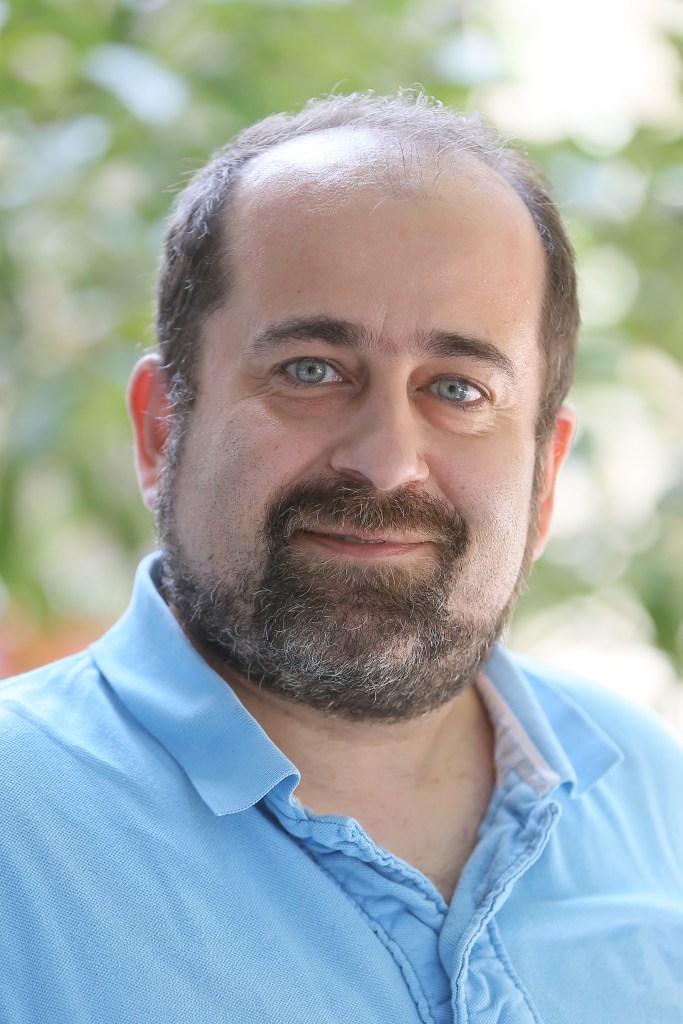
- The featured image and photo in the post are Eleni’s work.

Leave a Reply